We often take the humble door handle for granted until it stops working—or worse, until we find ourselves in a bathroom without a lock. Privacy is paramount in certain rooms of the house, and achieving that privacy usually comes down to a clever piece of engineering hidden inside your door: the bathroom mortice lock.
While surface-mounted bolts offer a rustic or utilitarian solution, a mortice lock provides a sleek, integrated finish where the mechanism is concealed within the door itself. But what actually happens when you twist that thumb turn? Understanding the mechanics of these locks not only satisfies curiosity but can also save you a call to a locksmith if yours starts to jam or stick.
This guide breaks down the inner workings of a bathroom mortice lock, exploring its components, the mechanics of movement, and why it remains the standard choice for modern homes.
What Is a Mortice Lock?
To understand how the lock works, we first need to define what "mortice" means. In carpentry, a mortice is a hole or recess cut into a part—in this case, the edge of the door. Unlike a rim lock, which is screwed onto the surface of the door, a mortice lock is embedded inside it.
This design offers two main benefits: aesthetics and strength. Because the bulk of the hardware is hidden, all you see are the faceplate, the handles, and the thumb turn. Structurally, because the lock is encased by the wood of the door, it is generally more secure and robust than surface-mounted alternatives.
The Anatomy of a Bathroom Mortice Lock
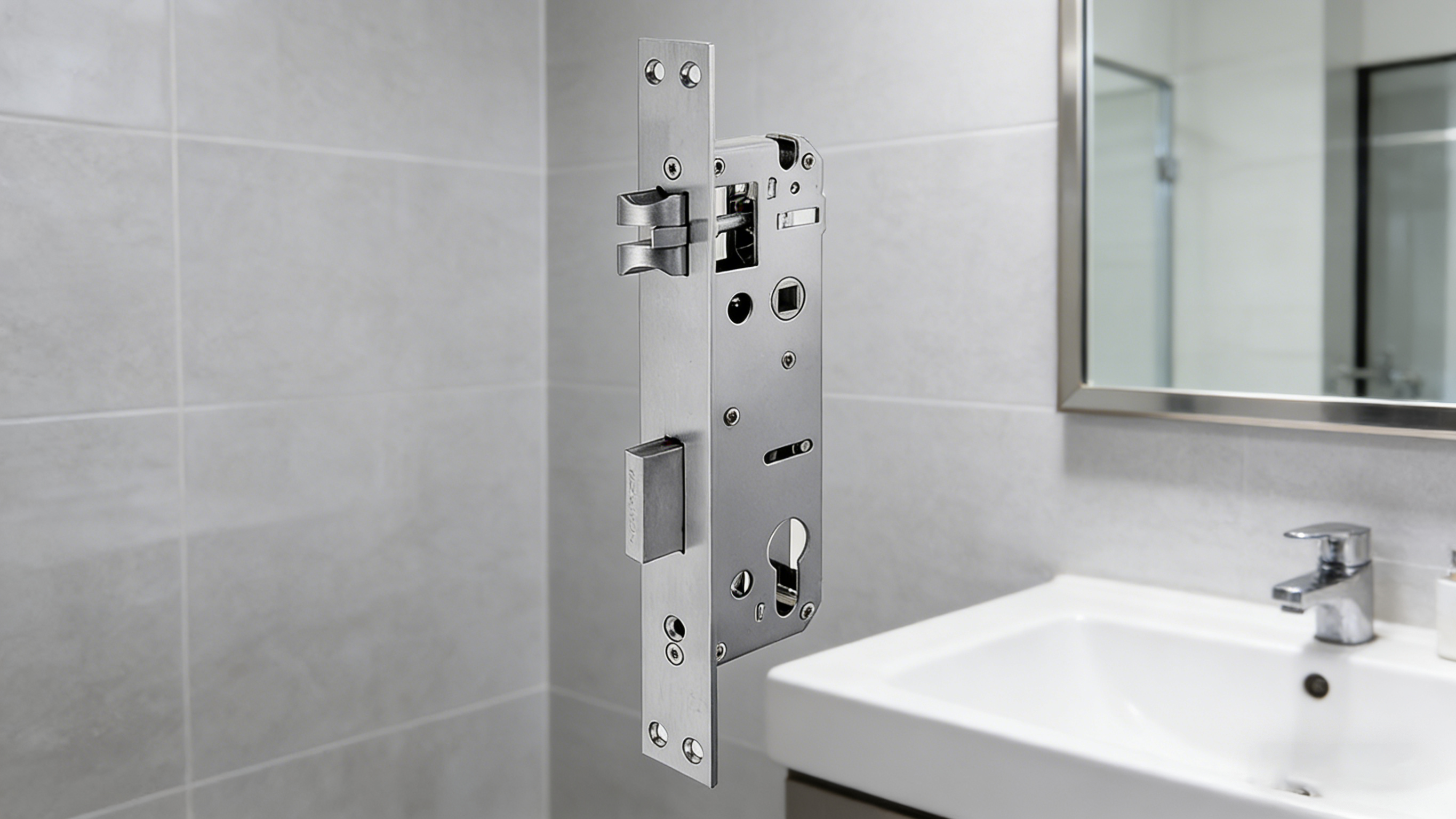
Although they look like solid metal boxes from the outside, the interior of a bathroom mortice lock is an assembly of springs, levers, and bolts. Here are the key components you need to know:
1. The Case
The "body" of the lock. This metal box houses all the internal components and protects them from dust and debris inside the door cavity.
2. The Faceplate
This is the visible metal strip that sits flush with the edge of the door. It allows the latch and bolt to pass through and provides a clean finish.
3. The Latch Bolt
This is the beveled (angled) tongue that protrudes from the top of the lock. It is spring-loaded and retracts when you turn the door handle, allowing the door to open. Because it is angled, it automatically retracts when you push the door closed, then springs back out into the door frame to hold it shut.
4. The Deadbolt
Located below the latch bolt, this is a solid, square piece of metal. Unlike the latch, it is not spring-loaded. It only moves when you manually turn the thumb turn. When extended, it physically prevents the door from opening.
5. The Followers
These are the rotating holes that the spindles (the metal bars connecting your handles) pass through. A standard bathroom mortice lock has two followers:
The Handle Follower: Generally 8mm square, this connects to the main door handle to operate the latch.
The Thumb Turn Follower: Generally 5mm square, this connects to the bathroom thumb turn (or snib) to operate the deadbolt.
The Mechanics: How It All Moves
When you approach a bathroom door, you are engaging with two distinct mechanisms housed within the same casing.
The Latching Mechanism
The latch is designed for temporary closure. Inside the lock case, the latch bolt is pushed outward by a compression spring. When the door is closed, the angled face of the bolt hits the strike plate on the door frame, forcing the bolt backward against the spring until the door is fully closed, at which point it snaps into the hole in the strike plate.
To open the door, you push down on the handle. The handle turns the spindle, which rotates the handle follower (the cam). This cam pulls against a mechanical arm attached to the back of the latch bolt, retracting it against the spring tension. Once you release the handle, the spring pushes everything back to its original position.
The Locking Mechanism
The locking action in a bathroom mortice lock is simpler than a front door lock because it doesn't require a complex key.
When you are inside the bathroom and turn the thumb turn (snib), you rotate the thumb turn follower. This follower has a cam that engages directly with the deadbolt. As you rotate the turn, the cam pushes the deadbolt out of the lock case and into the door frame.
Because there is no spring tension pulling the deadbolt back, it stays in the locked position until you manually turn the snib back the other way. This physical barrier prevents the door from opening even if someone depresses the handle.
The Vital Difference: Sashlocks vs. Bathroom Locks
A common point of confusion for DIY enthusiasts is the difference between a "mortice sashlock" and a "bathroom mortice lock." They look nearly identical, but their internal operations differ significantly.
A Mortice Sashlock is designed for keys. Below the handle follower, it has a keyhole shape. Inside, there is a set of levers (usually 3 or 5). When you insert a key, the teeth of the key lift these levers to a specific height, allowing the bolt to be thrown.
A Bathroom Mortice Lock does not use levers or keys. Instead, it uses the secondary follower (the 5mm square hole mentioned earlier). This is why you cannot use a standard sashlock on a bathroom door unless you want to carry a key with you every time you need to use the facilities. Bathroom locks are designed purely for privacy, not high-security anti-theft protection, which allows for the simpler thumb-turn mechanism.
Measuring for a Perfect Fit
If you are replacing a broken bathroom mortice lock, simply buying one that "looks right" often leads to frustration. The internal mechanics might be similar across brands, but the dimensions vary.
The Backset
This is the most critical measurement. It is the distance from the edge of the faceplate to the center of the spindle hole (follower). The most common sizes are 44mm (2.5 inch case) and 57mm (3 inch case). If you buy the wrong backset, your handle holes won't align with the lock.
The Centers
This refers to the vertical distance between the center of the handle follower and the center of the thumb turn follower. In the UK and much of Europe, the standard for bathroom locks is 57mm. However, older locks might measure 47mm or even different measurements entirely. If this measurement is off, your bathroom handle backplate won't fit the lock.
Troubleshooting Common Issues
Even the best-engineered mechanisms fail or falter over time. Here is how to identify common issues with how your lock is working:
The Latch Won't Retract Fully: This usually suggests a broken spring inside the case or debris jamming the cam. Since mortice locks are sealed units, this often requires replacing the lock body.
The Bolt Won't Throw: If the thumb turn spins but the bolt doesn't move, the spindle connecting the turn to the lock may be too short or has snapped. Alternatively, the follower inside the lock may have cracked.
The Door Rattles: This isn't a fault with the lock mechanism itself, but rather the strike plate on the door frame. If the little metal tab inside the strike plate is bent back too far, the latch bolt has too much room to move. Bending this tab forward slightly can tighten the fit.
Mastering Your Home Hardware
The bathroom mortice lock is a perfect example of functional engineering—hidden from view, simple in operation, yet essential for daily comfort. Whether you are renovating a home or simply fixing a sticky handle, understanding the distinction between the latch spring and the deadbolt throw allows you to choose the right hardware and maintain it correctly.
Next time you lock the bathroom door, take a second to appreciate the precise interaction of followers, springs, and bolts happening inside the wood, granting you that moment of peace and privacy.
Bathroom Mortice Lock
Passage Mortice Lock
Escape Mortice Lock

 English
 العربية
 Français
 Русский
 Español
 Português
 Deutsch
 italiano
 日本語
日本語 한국어
한국어 Nederlands
 Tiếng Việt
 ไทย
ไทย Polski
 Türkçe
 አማርኛ
አማርኛ ພາສາລາວ
 ភាសាខ្មែរ
 Bahasa Melayu
 ဗမာစာ
ဗမာစာ தமிழ்
தமிழ் Filipino
 Bahasa Indonesia
 magyar
 Română
 Čeština
 Монгол
 қазақ
қазақ Српски
 हिन्दी
 فارسی
فارسی Kiswahili
 Slovenčina
 Slovenščina
 Norsk
Norsk Svenska
 українська
 Ελληνικά
 Suomi
Suomi Հայերեն
 עברית
עברית Latine
 Dansk
Dansk اردو
اردو Shqip
Shqip বাংলা
বাংলা Hrvatski
 Afrikaans
 Gaeilge
 Eesti keel
 Māori
Māori සිංහල
සිංහල नेपाली
 Oʻzbekcha
 latviešu
 অসমীয়া
 Aymara
 Azərbaycan dili
 Bamanankan
 Euskara
 Беларуская мова
 भोजपुरी
 Bosanski
 Български
 Català
 Cebuano
 Corsu
Corsu ދިވެހި
 डोग्रिड ने दी
 Esperanto
 Eʋegbe
 Frysk
Frysk Galego
 ქართული
 guarani
 ગુજરાતી
 Kreyòl ayisyen
 Hausa
Hausa ʻŌlelo Hawaiʻi
 Hmoob
Hmoob íslenska
 Igbo
Igbo Ilocano
 Basa Jawa
 ಕನ್ನಡ
ಕನ್ನಡ Kinyarwanda
 गोंगेन हें नांव
 Krio we dɛn kɔl Krio
 Kurdî
Kurdî Kurdî
Kurdî Кыргызча
 Lingala
 Lietuvių
 Oluganda
 Lëtzebuergesch
 Македонски
 मैथिली
 Malagasy
 മലയാളം
 Malti
Malti मराठी
मराठी ꯃꯦꯇꯥꯏ (ꯃꯅꯤꯄꯨꯔꯤ) ꯴.
 Mizo tawng
 Chichewa
 ଓଡ଼ିଆ
ଓଡ଼ିଆ Afaan Oromoo
 پښتو
پښتو ਪੰਜਾਬੀ
 Runasimi
 Gagana Samoa
 संस्कृत
 Gaelo Albannach
 Sepeti
 Sesotho
 chiShona
 سنڌي
سنڌي Soomaali
 Basa Sunda
 Wikang Tagalog
 Тоҷикӣ
 Татарча
 తెలుగు
 ትግንያውያን
 Xitsonga
 Türkmençe
 संस्कृत
 ئۇيغۇرچە
 Cymraeg
 isiXhosa
 ייִדיש
 Yorùbá
 isiZulu