Security hardware can be a confusing world of jargon and specific measurements. If you are looking to replace a lock on a commercial door, a storefront glass door, or a high-end residential entry, you have likely encountered the term "mortise cylinder."
These threaded cylinders are the gold standard for durability and versatility. However, they are not one-size-fits-all. Ordering the wrong size can lead to a lock that either doesn't work or sticks out so far that it becomes a major security risk.
Fortunately, determining the correct size is a straightforward process if you know exactly where to look. This guide will walk you through everything you need to know about the mortise cylinder, why precision matters, and how to measure it correctly every single time.
Understanding the Mortise Cylinder
Before grabbing your ruler, it is helpful to understand what you are actually working with. A mortise cylinder is a specific type of lock housing that screws into the lock body or the door itself. It is distinct because of its threaded exterior, which looks like a large bolt.
You will typically find these on:
The cylinder consists of the plug (where the key goes), the shell (the threaded body), the head (the front face), and the cam (the tailpiece on the back that actually turns the lock). When we talk about measuring the cylinder, we are specifically looking at the length of the shell.
Why Exact Length Matters
You might assume that "close enough" is acceptable for door hardware, but with a mortise cylinder, precision is critical for two main reasons: functionality and security.
Functionality
Inside the door, the cam on the back of the cylinder needs to engage with the lock mechanism. If the cylinder is too short, the cam won't reach the actuator, and turning your key will do absolutely nothing. You will be locked out (or in), unable to operate the bolt.
Security and Aesthetics
If the cylinder is too long, it will protrude from the face of the door or the escutcheon (trim plate). This looks sloppy and unprofessional, but more importantly, it creates a vulnerability. A cylinder that sticks out is susceptible to a wrench attack, where a burglar clamps a tool onto the protruding cylinder and twists it to snap the lock.
Getting the measurement right ensures the cylinder sits flush with the trim ring or door face, making it difficult to grip and tamper with.
How to Measure the Length of a Mortise Cylinder
The most common mistake people make is measuring the entire length of the object from front to back. This will give you the wrong number. The industry standard for measuring a mortise cylinder ignores the cam and the face of the head.
Follow these steps to get the accurate industry-standard length.
Step 1: Remove the Cylinder from the Door
You cannot get an accurate measurement while the lock is installed.
Open the door and look at the edge (the faceplate).
Locate the set screw. It is usually inline with the cylinder height. Note that sometimes this screw is hidden behind the faceplate, so you may need to unscrew the long metal plate on the door edge first.
Loosen the set screw (do not remove it entirely, or it might fall inside the door).
Unscrew the mortise cylinder by turning the whole unit counter-clockwise. If it is tight, insert a key halfway to use as leverage, but be gentle to avoid snapping the key.
1
Step 2: Identify Your Measuring Points
Once the cylinder is in your hand, look at it from the side. You will see the "head" (the wider, round part that sits on the outside of the door) and the "shell" (the threaded body).
The Measurement Rule: You must measure from the underside of the head to the end of the threaded shell.
Do not include the thickness of the head in your measurement.
Do not include the cam (the metal tab on the back) in your measurement.
Step 3: Take the Measurement
Using a ruler or a digital caliper:
Place the "0" mark of your ruler against the underside of the head. This is the shoulder of the cylinder that rests against the door surface.
Measure the distance to the flat back edge of the cylinder shell.
Record this number.
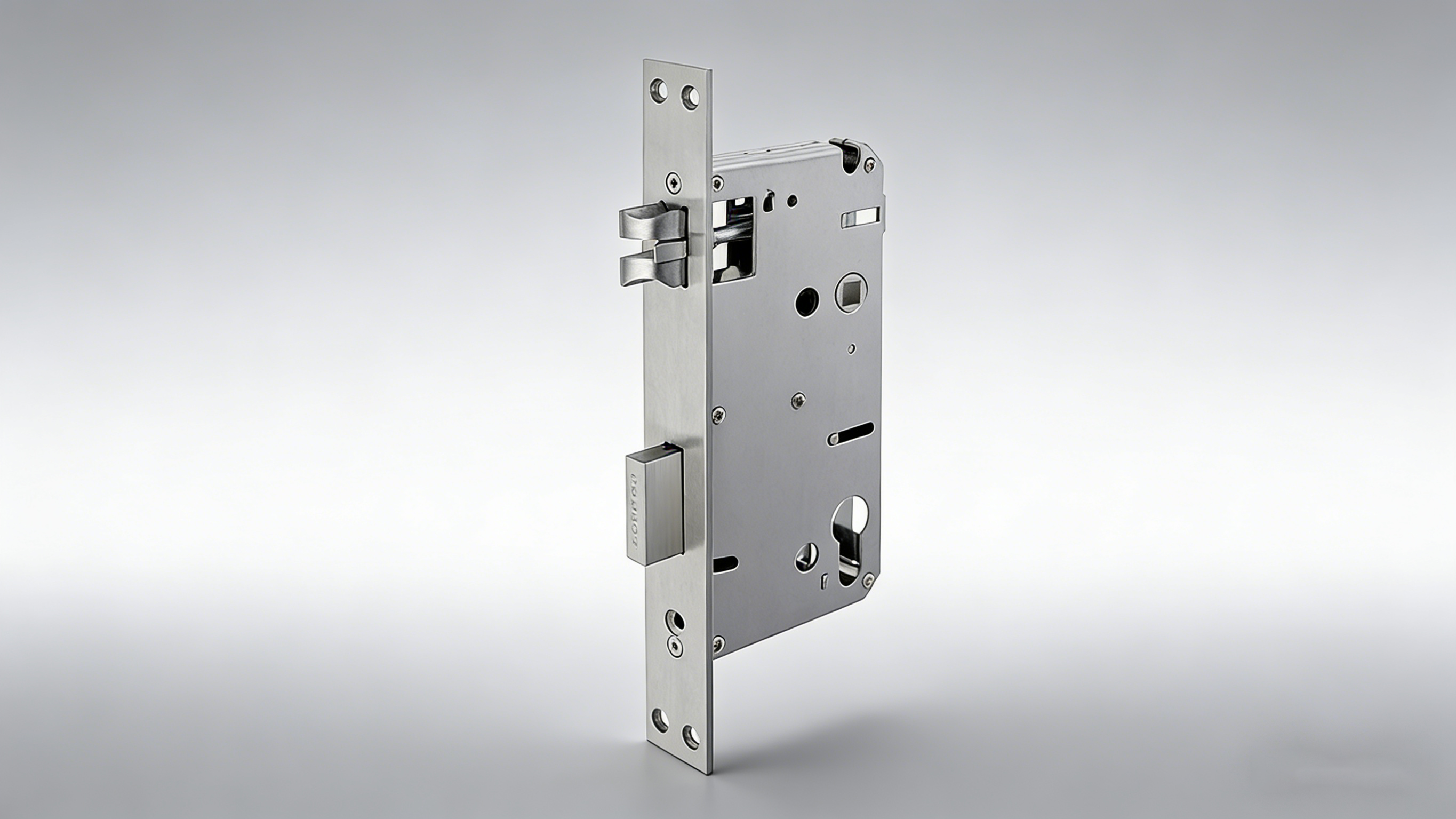
Common Standard Lengths
Most mortise cylinders come in standard increments. If your measurement is slightly off, round to the nearest standard size, provided it matches the old hardware.
1 inch: Very common for standard aluminum storefront doors.
1-1/8 inch: A standard size for many commercial hollow metal doors.
1-1/4 inch: Often used on thicker doors or doors with decorative trim plates.
Lengths can go up to 2 inches or more for thick, custom wood doors, usually increasing in 1/8-inch increments.
What About the Cam?
You might notice a flat metal piece attached to the back of your cylinder with two small screws. This is the cam. While you do not include the cam in the length measurement, it is still a vital part of the replacement process.
Different locks require different cams. For example, an Adams Rite lock requires a specific cam shape, while a standard Yale or Schlage mortise lock might require a "cloverleaf" or straight cam.
When buying a new mortise cylinder, the length is the first spec you choose. The second spec is the cam. Often, you can simply unscrew the old cam from your original cylinder and attach it to the new one, provided the screw hole spacing is standard.
Using Blocking Rings and Collars
What happens if you can't find the exact size, or you have a cylinder that is slightly too long? This is where blocking rings (also called spacing collars) come into play.
A blocking ring is a simple metal ring that slides over the cylinder shell before you screw it into the door. It acts as a spacer.
For example, if you need a 1-inch cylinder but only have a 1-1/8 inch cylinder available, you can use a 1/8-inch blocking ring. The ring sits between the cylinder head and the door, effectively "shortening" the part of the cylinder that enters the door by 1/8 of an inch. This ensures the cylinder remains tight and secure without the cam hitting internal obstructions or the head sticking out too far.
Frequently Asked Questions
Does the brand of the mortise cylinder matter?
In terms of sizing, usually not. The threads on mortise cylinders are standardized (1.150 x 32 UNS). This means a Schlage cylinder can usually fit into a lock body designed for a different brand, provided the length and the cam are correct. However, for keying purposes (using the same key for all doors), you will want to stick to the same brand or keyway.
My measurement is exactly between two sizes. What should I do?
It is generally safer to go slightly longer and use a blocking ring (collar) to take up the slack. If you go shorter, the cam might not reach the lock mechanism. However, if the difference is minuscule, check the manufacturer specs, as there can be slight manufacturing tolerances.
Can I measure the cylinder while it is still in the door?
It is not recommended. You can try to measure the door thickness and the escutcheon height to estimate the cylinder length, but this method is prone to error. The internal position of the lock mechanism varies. Taking the five minutes to remove the cylinder is the only way to be 100% sure.
The Final Turn
Replacing a mortise cylinder is one of the most satisfying quick fixes for business owners and homeowners. It instantly upgrades security or changes access without the need for a locksmith. However, that satisfaction depends entirely on the accuracy of your measurement.
Remember the golden rule: Measure from under the head to the end of the shell. Ignore the face, ignore the cam.
By following these simple steps, you ensure a perfect fit that looks professional and keeps your property secure. Whether you are swapping out a single lock or re-keying an entire building, taking the time to measure correctly will save you the headache of returns and the security risk of an ill-fitted lock.
Mortise Cylinder
Mortise Cylinders
EN 1303 Lock cylinder

 English
 العربية
 Français
 Русский
 Español
 Português
 Deutsch
 italiano
 日本語
日本語 한국어
한국어 Nederlands
 Tiếng Việt
 ไทย
ไทย Polski
 Türkçe
 አማርኛ
አማርኛ ພາສາລາວ
 ភាសាខ្មែរ
 Bahasa Melayu
 ဗမာစာ
ဗမာစာ தமிழ்
தமிழ் Filipino
 Bahasa Indonesia
 magyar
 Română
 Čeština
 Монгол
 қазақ
қазақ Српски
 हिन्दी
 فارسی
فارسی Kiswahili
 Slovenčina
 Slovenščina
 Norsk
Norsk Svenska
 українська
 Ελληνικά
 Suomi
Suomi Հայերեն
 עברית
עברית Latine
 Dansk
Dansk اردو
اردو Shqip
Shqip বাংলা
বাংলা Hrvatski
 Afrikaans
 Gaeilge
 Eesti keel
 Māori
Māori සිංහල
සිංහල नेपाली
 Oʻzbekcha
 latviešu
 অসমীয়া
 Aymara
 Azərbaycan dili
 Bamanankan
 Euskara
 Беларуская мова
 भोजपुरी
 Bosanski
 Български
 Català
 Cebuano
 Corsu
Corsu ދިވެހި
 डोग्रिड ने दी
 Esperanto
 Eʋegbe
 Frysk
Frysk Galego
 ქართული
 guarani
 ગુજરાતી
 Kreyòl ayisyen
 Hausa
Hausa ʻŌlelo Hawaiʻi
 Hmoob
Hmoob íslenska
 Igbo
Igbo Ilocano
 Basa Jawa
 ಕನ್ನಡ
ಕನ್ನಡ Kinyarwanda
 गोंगेन हें नांव
 Krio we dɛn kɔl Krio
 Kurdî
Kurdî Kurdî
Kurdî Кыргызча
 Lingala
 Lietuvių
 Oluganda
 Lëtzebuergesch
 Македонски
 मैथिली
 Malagasy
 മലയാളം
 Malti
Malti मराठी
मराठी ꯃꯦꯇꯥꯏ (ꯃꯅꯤꯄꯨꯔꯤ) ꯴.
 Mizo tawng
 Chichewa
 ଓଡ଼ିଆ
ଓଡ଼ିଆ Afaan Oromoo
 پښتو
پښتو ਪੰਜਾਬੀ
 Runasimi
 Gagana Samoa
 संस्कृत
 Gaelo Albannach
 Sepeti
 Sesotho
 chiShona
 سنڌي
سنڌي Soomaali
 Basa Sunda
 Wikang Tagalog
 Тоҷикӣ
 Татарча
 తెలుగు
 ትግንያውያን
 Xitsonga
 Türkmençe
 संस्कृत
 ئۇيغۇرچە
 Cymraeg
 isiXhosa
 ייִדיש
 Yorùbá
 isiZulu