You can look at two door locks that appear identical on the surface, yet one costs significantly more than the other. Why the discrepancy? The answer usually lies inside the mechanism and the rigorous testing it has endured. When securing a commercial building, a school, or a high-traffic office, relying on a standard residential lock is a recipe for failure—both in terms of security and mechanical longevity.
This brings us to the gold standard of door hardware: the ANSI Grade 1 lock.
If you are a facility manager, a business owner, or simply a homeowner looking for the highest level of security, understanding these grades is essential. This guide explains what an ANSI Grade 1 lock is, how it compares to other grades, and why it might be the investment your property needs.
Understanding the Basics: What Is an ANSI Grade 1 Lock?
An ANSI Grade 1 lock is a heavy-duty commercial security device that has met the most stringent testing requirements set by the American National Standards Institute (ANSI) and the Builders Hardware Manufacturers Association (BHMA).
When a lock is certified as Grade 1, it means it has survived rigorous torture tests designed to simulate years of abuse, harsh weather, and determined break-in attempts. It is the highest grade available for standard door hardware.
These locks are typically found in:
High-traffic schools and universities
Hospitals and healthcare facilities
Public buildings and government offices
Industrial facilities
Commercial exterior entrances
While they are designed for commercial use, security-conscious homeowners often install Grade 1 deadbolts on exterior doors for maximum protection against forced entry.
The Grading System: ANSI Lock Grades Explained
To understand why Grade 1 is the top tier, you must look at the hierarchy of ANSI lock grades. The BHMA classifies hardware into three categories based on durability, strength, and finish.
ANSI Grade 1 (Heavy Duty Commercial)
This is the toughest class. These locks are built for functionality and security in areas where the door might be opened and closed thousands of times a day. They are also engineered to withstand significant physical force.
ANSI Grade 2 (Light Commercial / Heavy Duty Residential)
ANSI Grade 2 locks are the middle ground. They are excellent for light commercial applications, such as interior office doors, or heavy-duty residential use, such as apartment complex entrances. They offer better security than standard home locks but aren't built for the relentless traffic of a public building.
ANSI Grade 3 (Residential)
These are standard locks found in most residential homes. They provide basic security and are designed for low-traffic areas. While adequate for interior home doors or secondary entrances, they generally do not offer the resistance required for commercial security.
Comparison Table: Grade 1 vs. Grade 2 vs. Grade 3
The following table breaks down the minimum requirements for each grade regarding knobs/levers and deadbolts.
Feature | ANSI Grade 1 | ANSI Grade 2 | ANSI Grade 3 |
Primary Application | Commercial / Institutional | Light Commercial / Residential | Standard Residential |
Cycle Test (Knobs) | 800,000+ Cycles | 400,000 Cycles | 200,000 Cycles |
Cycle Test (Deadbolts) | 250,000 Cycles | 150,000 Cycles | 100,000 Cycles |
Door Impact Test | 10 blows (75 lbs) | 5 blows (75 lbs) | 2 blows (75 lbs) |
Bolt Strength | Heavy resistance to sawing | Moderate resistance | Minimal resistance |
Typical Cost | High | Medium | Low |
The Testing Process: How Is Grade 1 Certified?
A manufacturer cannot simply slap a "Grade 1" sticker on a box. To earn this certification, the hardware must undrgo independent testing. The tests focus on three main pillars: operational durability, security strength, and material finish.
1. Operational Durability (Cycle Testing)
This measures longevity. A machine repeatedly turns the knob or lever and retracts the latch.
The Requirement: A Grade 1 lock must function perfectly for at least 800,000 cycles (for knobs/levers) or 1 million cycles (for mortise locks).
The Reality: This simulates decades of use. If a lock jams after 200,000 uses, it fails Grade 1 certification.
2. Security and Strength
This series of tests determines how well the lock stands up to brute force.
The Sledgehammer Test: The lock face must withstand several heavy blows without breaking or allowing entry.
The Kick Test: Weights are dropped or swung against the door to simulate a kick-in attempt. Grade 1 locks must withstand ten strikes of 75 pounds of force.
The Torque Test: Testers attempt to twist the knob or lever off with a wrench. Grade 1 levers must resist significantly higher torque pressure than Grade 2 or 3.
3. Finish and Materials
A lock that works well but rusts shut in six months is useless. Grade 1 hardware undergoes salt spray testing to ensure the finish remains intact even in coastal or humid environments.
When Should You Choose ANSI Grade 1 Over ANSI Grade 2?
Budget is often the deciding factor in construction or renovation projects. Since Grade 1 locks are more expensive, it is tempting to opt for ANSI Grade 2 locks to save money. However, using the wrong grade can lead to higher maintenance costs later.
Stick with ANSI Grade 2 locks if:
You are securing interior doors in a small office (e.g., a private office or supply closet).
You are managing a residential apartment block where traffic is moderate.
Budget is a primary constraint and the security risk is low.
Upgrade to ANSI Grade 1 locks if:
Safety is critical: Exterior doors protecting expensive assets or sensitive data require the highest strike resistance.
Traffic is high: Main entrances, public restrooms, and classrooms see high usage. A Grade 2 lock might wear out mechanically within a year in these environments, whereas a Grade 1 lock will last for years.
Vandalism is a risk: Grade 1 locks are harder to twist off, pry open, or break with a hammer.
1
Types of Grade 1 Locks
Grade 1 certification applies to various locking mechanisms. Manufacturers like Toptek Security Technology Co., Ltd. produce heavy-duty hardware that aligns with these rigorous standards.
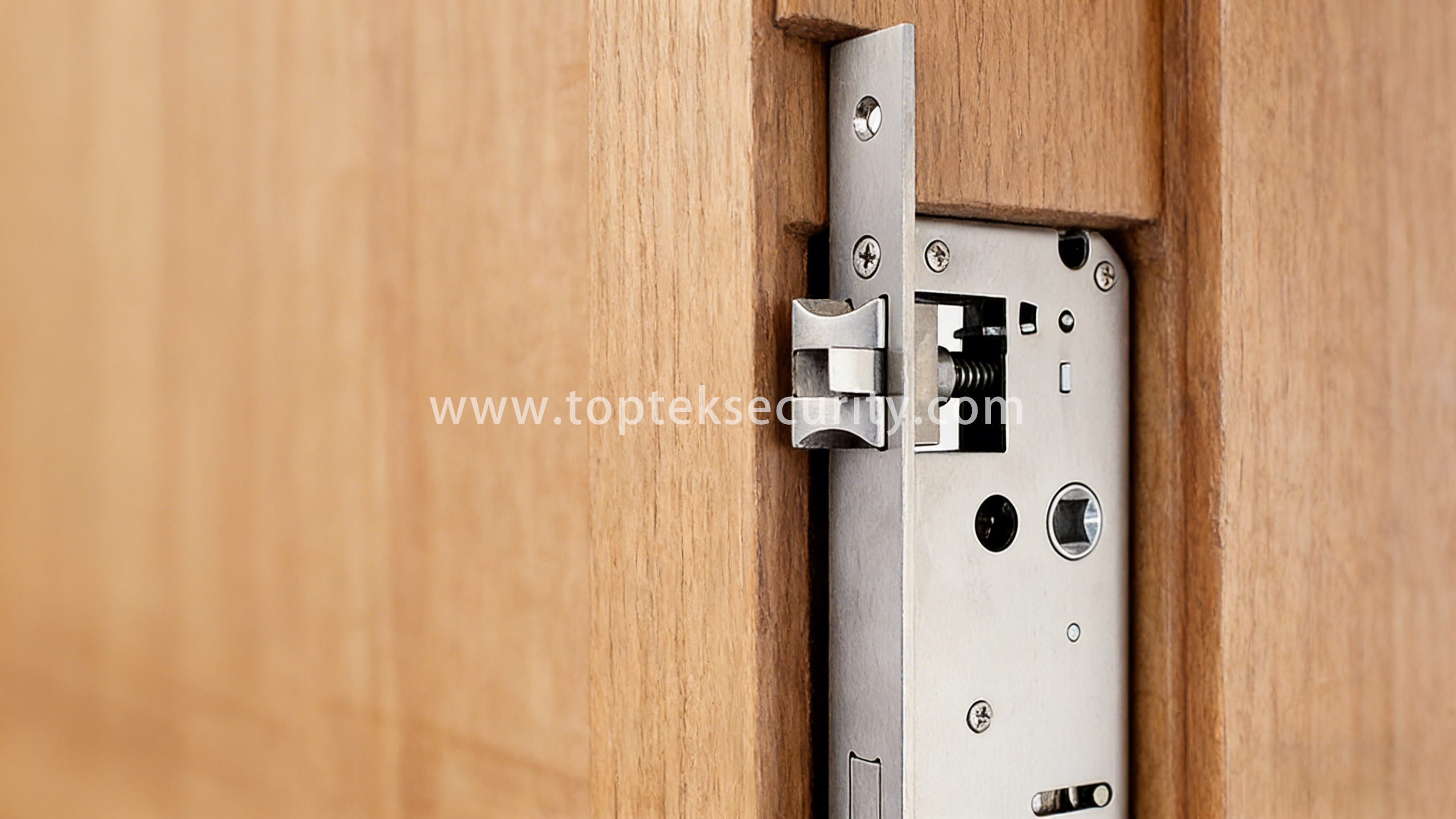
Mortise Locks: These are the strongest type of lock, installed into a pocket cut into the door edge. They are standard in high-security commercial buildings.
Cylindrical Lever Locks: Common in offices and schools, these are easier to install than mortise locks but still offer Grade 1 durability.
Deadbolts: A Grade 1 deadbolt typically features a 1-inch bolt throw with a hardened steel insert to prevent sawing.
1
Frequently Asked Questions
Can I use an ANSI Grade 1 lock on my house?
Absolutely. While they are often overkill for interior bedroom doors, installing a Grade 1 deadbolt on your front and back doors provides excellent protection against kick-in attacks, which are a common method of residential burglary.
Is ANSI the same as UL Rated?
No, but they often go together. ANSI grades refer to operation and security strength. UL (Underwriters Laboratories) ratings usually refer to fire safety. For example, a "UL Listed" lock is certified to withstand fire for a specific period (e.g., 3 hours) ensuring the door remains latched to prevent the spread of fire. Most commercial Grade 1 locks are also UL fire-rated.
How do ANSI grades compare to European (EN) standards?
ANSI is the standard for North America, while EN (European Norm) is used in Europe. While they test for similar outcomes—durability and security—the testing methods differ. For instance, ANSI focuses heavily on cycle counts, while EN standards have granular classifications for door mass and specific attack resistance. High-quality manufacturers often produce hardware that meets the specific certifications required for the region they are sold in.
Conclusion
Security is an investment, not just an expense. While ANSI Grade 1 locks come with a higher upfront cost, their ability to withstand millions of cycles and resist aggressive forced entry makes them the most cost-effective choice for commercial facilities in the long run.
Whether you are securing a university campus or simply want the best possible deadbolt for your home, looking for the BHMA/ANSI Grade 1 certification ensures you are getting hardware built to last. Before starting your next security project, assess the traffic and risk levels of your openings. If durability and high security are non-negotiable, Grade 1 is the only option.
Ansi Grade 1 Lock
ansi lock grades
Ansi Grade 1 Locks

 English
 العربية
 Français
 Русский
 Español
 Português
 Deutsch
 italiano
 日本語
日本語 한국어
한국어 Nederlands
 Tiếng Việt
 ไทย
ไทย Polski
 Türkçe
 አማርኛ
አማርኛ ພາສາລາວ
 ភាសាខ្មែរ
 Bahasa Melayu
 ဗမာစာ
ဗမာစာ தமிழ்
தமிழ் Filipino
 Bahasa Indonesia
 magyar
 Română
 Čeština
 Монгол
 қазақ
қазақ Српски
 हिन्दी
 فارسی
فارسی Kiswahili
 Slovenčina
 Slovenščina
 Norsk
Norsk Svenska
 українська
 Ελληνικά
 Suomi
Suomi Հայերեն
 עברית
עברית Latine
 Dansk
Dansk اردو
اردو Shqip
Shqip বাংলা
বাংলা Hrvatski
 Afrikaans
 Gaeilge
 Eesti keel
 Māori
Māori සිංහල
සිංහල नेपाली
 Oʻzbekcha
 latviešu
 অসমীয়া
 Aymara
 Azərbaycan dili
 Bamanankan
 Euskara
 Беларуская мова
 भोजपुरी
 Bosanski
 Български
 Català
 Cebuano
 Corsu
Corsu ދިވެހި
 डोग्रिड ने दी
 Esperanto
 Eʋegbe
 Frysk
Frysk Galego
 ქართული
 guarani
 ગુજરાતી
 Kreyòl ayisyen
 Hausa
Hausa ʻŌlelo Hawaiʻi
 Hmoob
Hmoob íslenska
 Igbo
Igbo Ilocano
 Basa Jawa
 ಕನ್ನಡ
ಕನ್ನಡ Kinyarwanda
 गोंगेन हें नांव
 Krio we dɛn kɔl Krio
 Kurdî
Kurdî Kurdî
Kurdî Кыргызча
 Lingala
 Lietuvių
 Oluganda
 Lëtzebuergesch
 Македонски
 मैथिली
 Malagasy
 മലയാളം
 Malti
Malti मराठी
मराठी ꯃꯦꯇꯥꯏ (ꯃꯅꯤꯄꯨꯔꯤ) ꯴.
 Mizo tawng
 Chichewa
 ଓଡ଼ିଆ
ଓଡ଼ିଆ Afaan Oromoo
 پښتو
پښتو ਪੰਜਾਬੀ
 Runasimi
 Gagana Samoa
 संस्कृत
 Gaelo Albannach
 Sepeti
 Sesotho
 chiShona
 سنڌي
سنڌي Soomaali
 Basa Sunda
 Wikang Tagalog
 Тоҷикӣ
 Татарча
 తెలుగు
 ትግንያውያን
 Xitsonga
 Türkmençe
 संस्कृत
 ئۇيغۇرچە
 Cymraeg
 isiXhosa
 ייִדיש
 Yorùbá
 isiZulu