Are you confident in the security of your business? ANSI Commercial Deadbolt Locks play a critical role in protecting your property.
ANSI (American National Standards Institute) sets industry standards for locks, ensuring quality and reliability. Commercial-grade locks are designed for higher security, making them essential for businesses.
In this post, we’ll explore what ANSI Commercial Deadbolt Locks are, why they matter, and the difference between Grade 1 and Grade 2 locks.
Understanding ANSI Lock Grades
What Is ANSI?
ANSI, or the American National Standards Institute, is an organization that develops safety and quality standards. These standards apply to a wide range of products, including locks.
ANSI sets the bar for reliability, durability, and performance in locks, ensuring they meet specific security needs. Their certification guarantees that products, like ANSI Commercial Deadbolt Locks, are tested and meet the highest standards.
What Is an ANSI Commercial Deadbolt Lock?
An ANSI Commercial Deadbolt Lock is a lock built for higher security than standard residential locks.These locks are designed to withstand more frequent use, as well as physical attacks such as tampering or forced entry.
Unlike home locks, these are intended for environments like offices, retail spaces, and banks, where security is critical. Their robust design ensures safety in areas that need extra protection, like hospitals and government buildings.
The ANSI Lock Grading System
The ANSI grading system classifies locks into three grades: Grade 1, Grade 2, and Grade 3.
| Grade | Tests Passed | Ideal Use Case |
| Grade 1 | 250,000 cycles, resistance to severe physical attacks | High-risk, high-traffic areas like banks and government buildings |
| Grade 2 | 150,000 cycles, moderate resistance to physical attacks | General commercial use, such as office buildings and retail stores |
| Grade 3 | 100,000 cycles, less resistance to tampering | Residential or low-risk environments |
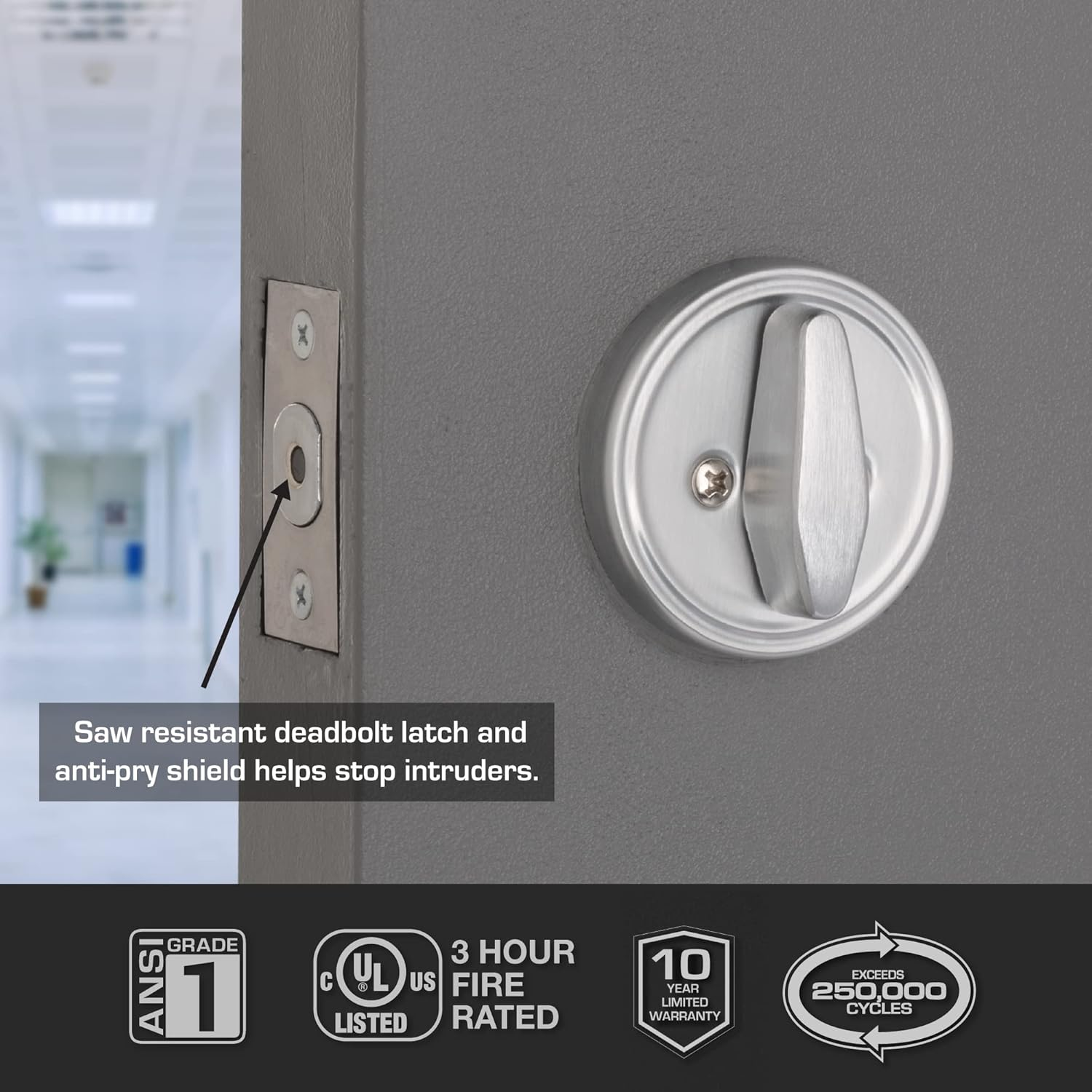
Grade 1 locks are the most secure. They undergo rigorous tests, including 250,000 cycles of operation and resistance to severe physical attacks. These are ideal for high-security areas, like banks and government buildings.
Grade 2 locks provide a solid balance between security and cost. They undergo 150,000 cycles of testing and are suitable for general commercial use, such as office buildings and retail spaces.
Grade 3 locks are the least secure and are primarily used in residential settings. They undergo fewer tests and are suitable for lower-risk environments.
Each grade ensures that a lock is reliable for its intended purpose, whether it’s for a high-security facility or general commercial use.
ANSI Commercial Deadbolt Locks: Grade 1 vs. Grade 2
What is Grade 1 in ANSI Commercial Deadbolt Locks?
Grade 1 locks are the highest security standard for commercial deadbolt locks. These locks must pass extremely rigorous tests to ensure their durability and resistance to tampering.
To be classified as Grade 1, a lock must endure 250,000 cycles of durability testing, according to the ANSI/BHMA A156.36 standard. This ensures the lock remains functional through heavy use. Additionally, Grade 1 locks must withstand physical tests that simulate forced entry attempts, including prying, drilling, and sawing.
Grade 1 locks are designed for high-security environments. They are commonly used in critical infrastructure like banks, government buildings, and military facilities.
Examples of Grade 1 locks include high-end commercial deadbolts that are engineered for maximum security in demanding environments.
What is Grade 2 in ANSI Commercial Deadbolt Locks?
Grade 2 locks provide strong security but are slightly less robust than Grade 1 locks. These locks undergo 150,000 cycles of durability testing, ensuring they’re durable for moderate use.
Grade 2 locks are also tested for resistance to forced entry, but the security features may not be as heavy-duty as Grade 1 locks. They are ideal for general commercial use, including offices, retail stores, and schools.
These locks strike a balance between affordability and security, making them a good choice for environments that don't face the same level of risk as high-security areas.
Which is Better: Grade 1 or Grade 2 Commercial Deadbolt Locks?
When deciding between Grade 1 and Grade 2, it depends on your security needs.
| Lock Grade | Ideal Use Case | Security Level | Cost |
| Grade 1 | High-risk areas like banks, government buildings | Maximum security, heavy-duty tests | High |
| Grade 2 | Moderate-risk areas like offices, retail stores | Solid security, moderate tests | Medium |
Grade 1 is best for high-risk, high-traffic areas where maximum security is required. It's perfect for financial institutions, government buildings, and other facilities requiring top-tier protection.
Grade 2 is more cost-effective and suitable for moderate-risk areas like office buildings and retail stores, where security needs are important but not as critical as in Grade 1 areas.
While Grade 1 locks offer higher security, Grade 2 locks are a good option for businesses looking for a balance of cost and reliable security.
How to Choose the Right ANSI Commercial Deadbolt Lock for Your Business
Factors to Consider When Choosing a Commercial Deadbolt Lock
When selecting the right ANSI Commercial Deadbolt Lock, consider several factors:
Security level: What type of protection does your business need? High-risk areas like banks or government buildings require Grade 1 locks. Moderate-risk areas, such as office buildings, can typically use Grade 2 locks.
Frequency of use: If the lock will be used frequently, choose a model designed for durability. Grade 1 locks undergo more rigorous tests for frequent use.
Environmental factors: Is your lock exposed to weather or physical threats? Some areas might require more weather-resistant materials or additional security features.
Budget: Determine how much you're willing to spend. Grade 2 locks offer a solid balance between security and cost, making them a good option for businesses with limited budgets.
By assessing your business’s risk profile, you can match the right lock grade to your needs.
How to Determine Which ANSI Grade Lock Is Best for Your Business
When choosing between Grade 1 and Grade 2, ask yourself:
What is the security risk at my facility?
How often will the lock be used?
What is my budget for security?
If you're unsure, consult a security provider to evaluate your needs. They can help assess the type of facility, traffic, and potential threats. Balancing cost, durability, and security is key.
For general office environments, Grade 2 locks are usually sufficient. However, if you’re dealing with high-risk or critical infrastructure, Grade 1 is the better choice.
Key Features of ANSI Commercial Deadbolt Locks
Durability and Long-Term Use
ANSI Commercial Deadbolt Locks are built to last much longer than typical residential locks. Designed for high-use environments, they undergo rigorous testing to ensure durability.
| Test | Grade 1 | Grade 2 |
| Cycles of Operation | 250,000 cycles | 150,000 cycles |
| Anti-tampering Tests | Resistant to forced entry (prying, drilling, sawing) | Resistant to moderate tampering attempts |
250,000 cycles of operation: Grade 1 locks can endure up to 250,000 cycles, making them perfect for heavy-use areas.
Anti-tampering tests: These locks are also tested for tampering resistance, ensuring they stay functional and secure over time.
This durability is essential for commercial environments where locks are constantly engaged.
Resistance to Physical Attacks
ANSI Commercial Deadbolt Locks are specifically designed to withstand physical attacks.
| Attack Type | Grade 1 | Grade 2 |
| Anti-pick | Resistant to picking and prying | Moderate resistance |
| Anti-drill | Withstands drilling attempts | Can resist basic drilling attempts |
| Reinforced Materials | 304 stainless steel | Strong, but not as reinforced as Grade 1 |
The high-quality materials and design prevent unauthorized access, making these locks suitable for high-security areas.
Enhanced Safety and Security Features
ANSI Commercial Deadbolt Locks come with several safety features designed to prevent break-ins.
| Feature | Grade 1 | Grade 2 |
| Double-keyed Operation | Requires a key on both sides for added security | Available for some models |
| Reinforced Lock Bolts | Extra-resistant to forced opening | Reinforced but less heavy-duty than Grade 1 |
| Anti-saw Pins | Resists cutting attempts | Available in select models |
Together, these features help protect your business from common break-in methods like drilling and picking.
The Importance of ANSI Certification for Commercial Deadbolt Locks
Why ANSI Certification Is Crucial for Commercial Security
ANSI Commercial Deadbolt Locks offer the trust and reliability businesses need for secure environments. ANSI certification ensures these locks meet rigorous performance and safety standards.
High performance: ANSI-certified locks are tested for durability, ensuring they stand up to wear and tear in high-traffic areas.
Safety benchmarks: These standards focus on resistance to physical attacks, such as picking, drilling, and tampering.
For businesses, investing in ANSI-certified locks means you’re prioritizing security, knowing that the locks are built to meet the highest safety standards.
The Role of ANSI in Regulating Lock Safety
ANSI collaborates with organizations like the Builders Hardware Manufacturers Association (BHMA) to develop comprehensive standards for locks.
ANSI sets the rules for everything from durability to physical resistance tests for locks.
Compliance with these standards is critical for manufacturers, ensuring that locks are reliable for commercial use.
Businesses depend on these rigorous standards to safeguard their spaces from security breaches. ANSI-certified locks give businesses peace of mind that they’re protected by the best in the industry.
Common Misconceptions About ANSI Commercial Deadbolt Locks
Are All Commercial Deadbolt Locks the Same?
Not all commercial deadbolt locks are created equal. ANSI-certified locks are far superior to non-certified versions due to their rigorous testing and resistance to tampering.
ANSI certification ensures the lock has passed durability and security tests, while non-certified locks might not meet these high standards.
Non-certified locks may fail to withstand physical attacks like drilling or picking, putting your business at risk.
ANSI-certified locks are specifically designed to provide maximum security, making them a reliable choice for any commercial space.
Do All Commercial Deadbolt Locks Have the Same ANSI Grade?
No, not all commercial deadbolt locks have the same ANSI grade. It's crucial to know the specific grade of your lock.
Grade 1 locks provide the highest level of security, while Grade 2 offers a balance of security and affordability.
Using an improperly graded lock can expose your business to unnecessary risks.
By understanding the grade of your lock, you ensure that it provides the correct level of security for your specific needs.
Conclusion
ANSI Commercial Deadbolt Locks are crucial for securing your business. They provide durability, resistance to tampering, and peace of mind.
When choosing the right lock, consider the ANSI grade. Grade 1 is best for high-risk areas, while Grade 2 is ideal for moderate-risk environments.
For expert advice, contact a professional locksmith or security provider to ensure you're getting the right security for your needs.
FAQ
Q: What is the Difference Between Grade 1, Grade 2, and Grade 3 ANSI Locks?
A: Grade 1 locks are ideal for high-risk areas, providing top security. Grade 2 balances security and cost for general use. Grade 3 is suitable for residential or low-risk environments.
Q: How Long Do ANSI Commercial Deadbolt Locks Last?
A: Grade 2 locks last about 150,000 cycles, while Grade 1 locks last up to 250,000 cycles. Durability depends on usage and environmental conditions.
Q: Are ANSI Commercial Deadbolt Locks Worth the Investment for Small Businesses?
A: Yes, investing in ANSI Commercial Deadbolt Locks, especially Grade 1, can prevent costly security breaches in high-risk commercial environments.
Q: Can I Install an ANSI Commercial Deadbolt Lock Myself?
A: While DIY installation is possible, professional installation is recommended for Grade 1 locks to ensure proper security and function.

 English
 العربية
 Français
 Русский
 Español
 Português
 Deutsch
 italiano
 日本語
日本語 한국어
한국어 Nederlands
 Tiếng Việt
 ไทย
ไทย Polski
 Türkçe
 አማርኛ
አማርኛ ພາສາລາວ
 ភាសាខ្មែរ
 Bahasa Melayu
 ဗမာစာ
ဗမာစာ தமிழ்
தமிழ் Filipino
 Bahasa Indonesia
 magyar
 Română
 Čeština
 Монгол
 қазақ
қазақ Српски
 हिन्दी
 فارسی
فارسی Kiswahili
 Slovenčina
 Slovenščina
 Norsk
Norsk Svenska
 українська
 Ελληνικά
 Suomi
Suomi Հայերեն
 עברית
עברית Latine
 Dansk
Dansk اردو
اردو Shqip
Shqip বাংলা
বাংলা Hrvatski
 Afrikaans
 Gaeilge
 Eesti keel
 Māori
Māori සිංහල
සිංහල नेपाली
 Oʻzbekcha
 latviešu
 অসমীয়া
 Aymara
 Azərbaycan dili
 Bamanankan
 Euskara
 Беларуская мова
 भोजपुरी
 Bosanski
 Български
 Català
 Cebuano
 Corsu
Corsu ދިވެހި
 डोग्रिड ने दी
 Esperanto
 Eʋegbe
 Frysk
Frysk Galego
 ქართული
 guarani
 ગુજરાતી
 Kreyòl ayisyen
 Hausa
Hausa ʻŌlelo Hawaiʻi
 Hmoob
Hmoob íslenska
 Igbo
Igbo Ilocano
 Basa Jawa
 ಕನ್ನಡ
ಕನ್ನಡ Kinyarwanda
 गोंगेन हें नांव
 Krio we dɛn kɔl Krio
 Kurdî
Kurdî Kurdî
Kurdî Кыргызча
 Lingala
 Lietuvių
 Oluganda
 Lëtzebuergesch
 Македонски
 मैथिली
 Malagasy
 മലയാളം
 Malti
Malti मराठी
मराठी ꯃꯦꯇꯥꯏ (ꯃꯅꯤꯄꯨꯔꯤ) ꯴.
 Mizo tawng
 Chichewa
 ଓଡ଼ିଆ
ଓଡ଼ିଆ Afaan Oromoo
 پښتو
پښتو ਪੰਜਾਬੀ
 Runasimi
 Gagana Samoa
 संस्कृत
 Gaelo Albannach
 Sepeti
 Sesotho
 chiShona
 سنڌي
سنڌي Soomaali
 Basa Sunda
 Wikang Tagalog
 Тоҷикӣ
 Татарча
 తెలుగు
 ትግንያውያን
 Xitsonga
 Türkmençe
 संस्कृत
 ئۇيغۇرچە
 Cymraeg
 isiXhosa
 ייִדיש
 Yorùbá
 isiZulu