Security is often the first thing on a homeowner's mind when moving into a new place or upgrading an existing one. We all want to feel safe when we lock up at night. For many, this means ensuring that entry doors are as fortified as possible. If you have a mortise lock, you might be wondering if that's enough, or if adding a separate deadbolt is the right move for extra peace of mind.
Mortise locks are renowned for their strength and durability, often found in commercial buildings and older residential properties. They are integrated directly into the door itself, rather than just the surface, which generally makes them harder to force open than standard cylindrical locks. However, the question of whether you can—or should—add a separate deadbolt to a door that already has a mortise lock is a common one.
The short answer is yes, you physically can add a deadbolt to a door with a mortise lock, but it is rarely the most efficient or aesthetically pleasing solution. Because mortise locks are complex mechanisms that often already include a deadbolt function within the single unit, installing a second, separate deadbolt can compromise the door's structural integrity and ruin its look.
In this guide, we will explore the mechanics of mortise locks, why adding a second deadbolt might be redundant, and the best ways to upgrade your security without drilling unnecessary holes in your door.
Understanding the Mechanics of a Mortise Lock
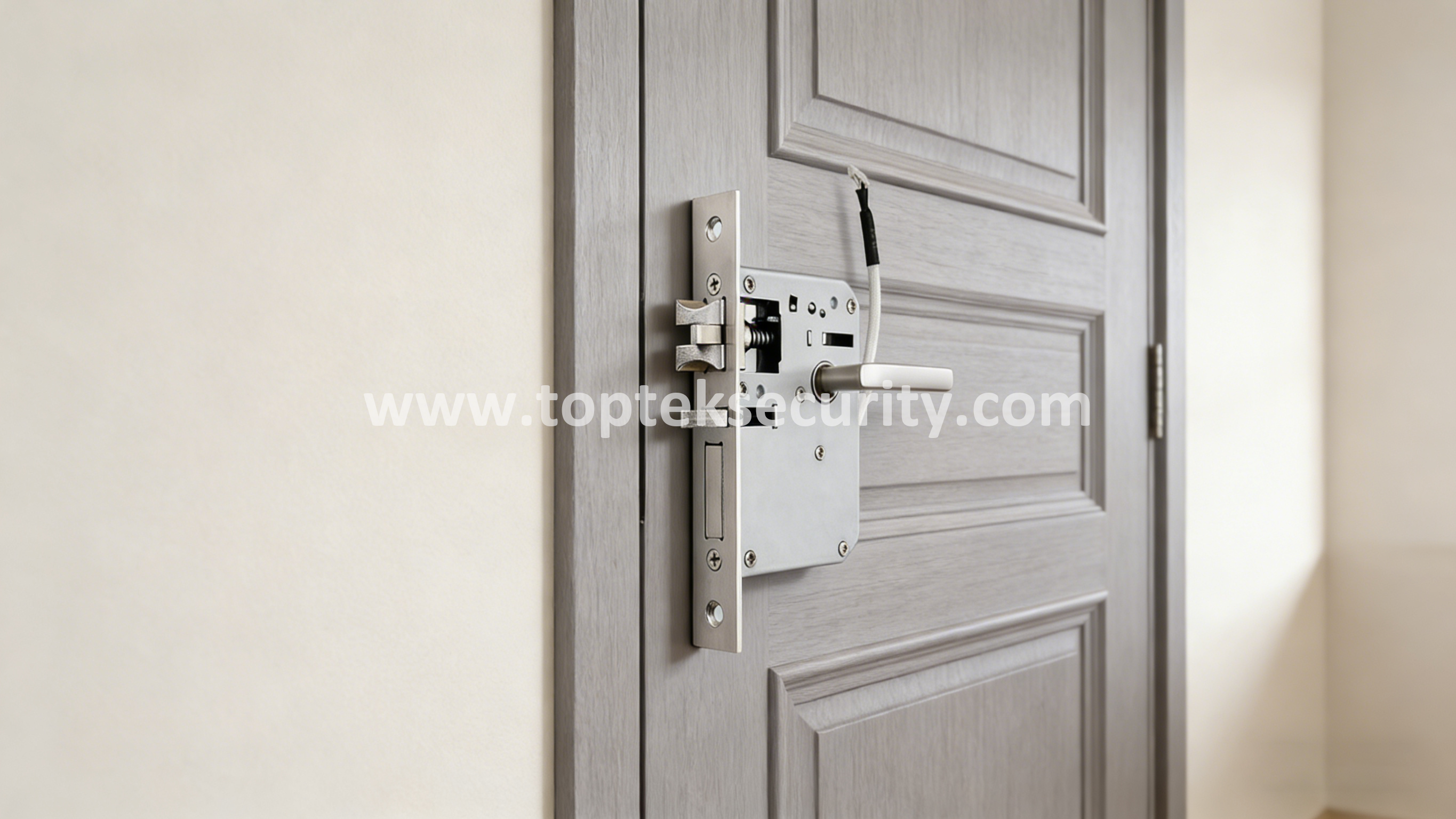
Before deciding to drill into your door, it is crucial to understand what you are working with. A mortise lock is not your average door knob. It is a heavy-duty locking mechanism that fits into a pocket (or "mortise") cut into the edge of the door.
Components of a Mortise Lock
Unlike cylindrical locks where the latch and deadbolt are often separate, a mortise lock body typically houses multiple functions in one metal casing.
The Latch Bolt: This keeps the door closed and is operated by the handle or knob.
The Deadbolt: Most mortise lock bodies already contain a heavy-duty deadbolt that is operated by a key from the outside and a thumb turn from the inside.
The Lock Body: The large rectangular box hidden inside the door that connects all these parts.
Because the lock body takes up a significant amount of space inside the door structure, finding a spot to install a separate tubular deadbolt without hitting the existing mortise mechanism is difficult. Drilling into the mortise pocket or the lock body itself would destroy the lock.
Can You Add a Separate Deadbolt?
Technically, yes. If you have a solid wood door and there is enough vertical clearance above the existing mortise lock, you can bore a new hole for a standard tubular deadbolt. However, there are significant drawbacks to consider.
Structural Integrity
Mortise locks require a large amount of wood to be removed from the door to create the pocket. Drilling another large hole for a separate deadbolt removes even more material. This can weaken the door, making it more susceptible to splitting or breaking under physical force—ironically lowering your security rather than raising it.
Aesthetics
Mortise locks are often chosen for their classic, clean look. They feature decorative trim plates (escutcheons) that cover a large portion of the door face. Installing a modern, round deadbolt above a vintage or high-end mortise handle set often looks mismatched and cluttered.
Redundancy
Since the vast majority of mortise locks already include a deadbolt as part of the mechanism, adding a second one offers diminishing returns. A high-quality mortise deadbolt is generally stronger than a standard residential tubular deadbolt.
The Better Solution: Upgrading Your Mortise Cylinder
If your goal is to increase security, you don't need a new hole in your door; you likely just need a better cylinder. The cylinder is the part of the lock where you insert the key.
Many older mortise locks operate with standard cylinders that might be vulnerable to picking or bumping. Instead of adding a second lock, you can simply unscrew the existing cylinder and replace it with a high-security cylinder.
Benefits of upgrading the cylinder:
No Drilling: You don't risk damaging the door or the lock mechanism.
Higher Security: High-security cylinders feature drill resistance, pick resistance, and restricted keyways (meaning no one can copy your key without permission).
Cost-Effective: It is often cheaper than buying a new deadbolt and paying for installation.
Mortise Locks vs. Tubular Deadbolts
To help visualize why mortise locks are generally sufficient on their own, here is a comparison of their typical features:
Feature | Mortise Lock (with integral deadbolt) | Standard Tubular Deadbolt |
Strength | High (Internal box reinforces the door) | Moderate (Dependent on door frame strength) |
Durability | Excellent (Designed for high traffic/commercial use) | Good (Residential grade varies) |
Security | High (Often harder to pick/force) | Moderate (Varies by grade) |
Installation | Complex (Requires specialized woodworking) | Simple (Standard bore holes) |
Cost | Higher upfront cost | Lower upfront cost |
When Should You Replace the Entire Lock?
There are times when upgrading the cylinder isn't enough. If the internal springs are broken, the bolt is sticky, or the hardware is rusted, it might be time to replace the entire mortise lockset.
Companies like Zhongshan Toptek Security Technology Co., Ltd. specialize in mechanical and electrified hardware solutions. They offer a wide range of mortise locks that comply with international standards like ANSI and EN.
If you are looking for specific replacements, consider these options based on your needs:
1. High-Security Commercial Mortise Locks
For businesses or high-traffic areas, upgrading to a Grade 1 commercial mortise lock ensures maximum durability. These locks are tested to withstand millions of cycles.
2. Electrified Mortise Locks
If you want to modernize your entry, you don't have to switch to a smart deadbolt and lose your mortise functionality. You can install an electrified mortise lock case. These connect to access control systems, allowing you to use keycards, codes, or remote unlocking while maintaining the physical strength of a mortise lock.
3. Fire-Rated Mortise Locks
For apartment buildings or commercial spaces, ensuring your lock is fire-rated is a legal necessity. Toptek Hardware provides CE-certified European mortise door locks designed specifically for fire-rated doors.
Frequently Asked Questions
Can I install a smart lock on a mortise lock door?
Yes, but you cannot use the standard "retrofit" smart locks designed for tubular deadbolts (like the August Wi-Fi Smart Lock) because the thumb turn mechanics are different. You will need to look for smart locks specifically designed for mortise conversions, or replace the entire handle set with a smart mortise lock.
How do I know if I have a mortise lock?
Look at the edge of the door. If you see a wide metal faceplate (usually about 1 inch wide and 8 inches tall) that houses both the latch and the deadbolt, it is a mortise lock. If you see a separate latch plate and a separate deadbolt plate, you have a cylindrical (tubular) system.
Is a mortise lock more secure than a deadbolt?
Generally, yes. A mortise lock body is encased in a metal box inside the door, providing more structural support than a tubular deadbolt which just passes through the door. Furthermore, mortise deadbolts often have a longer "throw" (the distance the bolt extends into the frame), offering better resistance against kick-ins.
Can I replace a mortise lock with a standard deadbolt?
This is very difficult. Removing a mortise lock leaves a massive cavity in the door. A standard deadbolt will not fill this hole. To do this, you would typically need to replace the entire door or use a specialized (and often unattractive) remodeling plate to cover the gaps.
Securing Your Home Without Compromise
While the instinct to add "more locks" is understandable, security is about quality, not quantity. A single, well-maintained mortise lock with a high-security cylinder is far superior to a door riddled with cheap locks that weaken its structure.
If your current hardware is failing, consider sourcing a replacement from a reputable manufacturer. Whether you need an American commercial mortise lock or a European profile lock, experts like those at Zhongshan Toptek Security Technology Co., Ltd. can provide hardware that ensures your door remains both secure and functional.
Focus on reinforcing what you have—upgrade the cylinder, install a longer strike plate on the door frame, or replace the lock body if it is worn out. These steps will give you the fortress-like security you want without the headache of drilling new holes.
Mortise Lock
mortise deadbolt
room door lock

 English
 العربية
 Français
 Русский
 Español
 Português
 Deutsch
 italiano
 日本語
日本語 한국어
한국어 Nederlands
 Tiếng Việt
 ไทย
ไทย Polski
 Türkçe
 አማርኛ
አማርኛ ພາສາລາວ
 ភាសាខ្មែរ
 Bahasa Melayu
 ဗမာစာ
ဗမာစာ தமிழ்
தமிழ் Filipino
 Bahasa Indonesia
 magyar
 Română
 Čeština
 Монгол
 қазақ
қазақ Српски
 हिन्दी
 فارسی
فارسی Kiswahili
 Slovenčina
 Slovenščina
 Norsk
Norsk Svenska
 українська
 Ελληνικά
 Suomi
Suomi Հայերեն
 עברית
עברית Latine
 Dansk
Dansk اردو
اردو Shqip
Shqip বাংলা
বাংলা Hrvatski
 Afrikaans
 Gaeilge
 Eesti keel
 Māori
Māori සිංහල
සිංහල नेपाली
 Oʻzbekcha
 latviešu
 অসমীয়া
 Aymara
 Azərbaycan dili
 Bamanankan
 Euskara
 Беларуская мова
 भोजपुरी
 Bosanski
 Български
 Català
 Cebuano
 Corsu
Corsu ދިވެހި
 डोग्रिड ने दी
 Esperanto
 Eʋegbe
 Frysk
Frysk Galego
 ქართული
 guarani
 ગુજરાતી
 Kreyòl ayisyen
 Hausa
Hausa ʻŌlelo Hawaiʻi
 Hmoob
Hmoob íslenska
 Igbo
Igbo Ilocano
 Basa Jawa
 ಕನ್ನಡ
ಕನ್ನಡ Kinyarwanda
 गोंगेन हें नांव
 Krio we dɛn kɔl Krio
 Kurdî
Kurdî Kurdî
Kurdî Кыргызча
 Lingala
 Lietuvių
 Oluganda
 Lëtzebuergesch
 Македонски
 मैथिली
 Malagasy
 മലയാളം
 Malti
Malti मराठी
मराठी ꯃꯦꯇꯥꯏ (ꯃꯅꯤꯄꯨꯔꯤ) ꯴.
 Mizo tawng
 Chichewa
 ଓଡ଼ିଆ
ଓଡ଼ିଆ Afaan Oromoo
 پښتو
پښتو ਪੰਜਾਬੀ
 Runasimi
 Gagana Samoa
 संस्कृत
 Gaelo Albannach
 Sepeti
 Sesotho
 chiShona
 سنڌي
سنڌي Soomaali
 Basa Sunda
 Wikang Tagalog
 Тоҷикӣ
 Татарча
 తెలుగు
 ትግንያውያን
 Xitsonga
 Türkmençe
 संस्कृत
 ئۇيغۇرچە
 Cymraeg
 isiXhosa
 ייִדיש
 Yorùbá
 isiZulu