Replacing a door lock seems like a straightforward DIY task—until you get to the hardware store. You are suddenly engaged in a staring contest with a wall of boxes, all boasting different numbers, sizes, and configurations. You pick one that looks roughly the same size as your old one, take it home, and slide it into the door, only to find that the handle spindle doesn't line up with the existing hole.
This is a classic frustration for homeowners, but it is entirely preventable. The secret lies in understanding one crucial measurement: the backset.
Whether you are upgrading your security, replacing a broken mechanism, or simply updating your door furniture for a fresh look, getting the backset right is the difference between a five-minute job and a day spent filling and re-drilling holes.
What Exactly is a Mortice Lock?
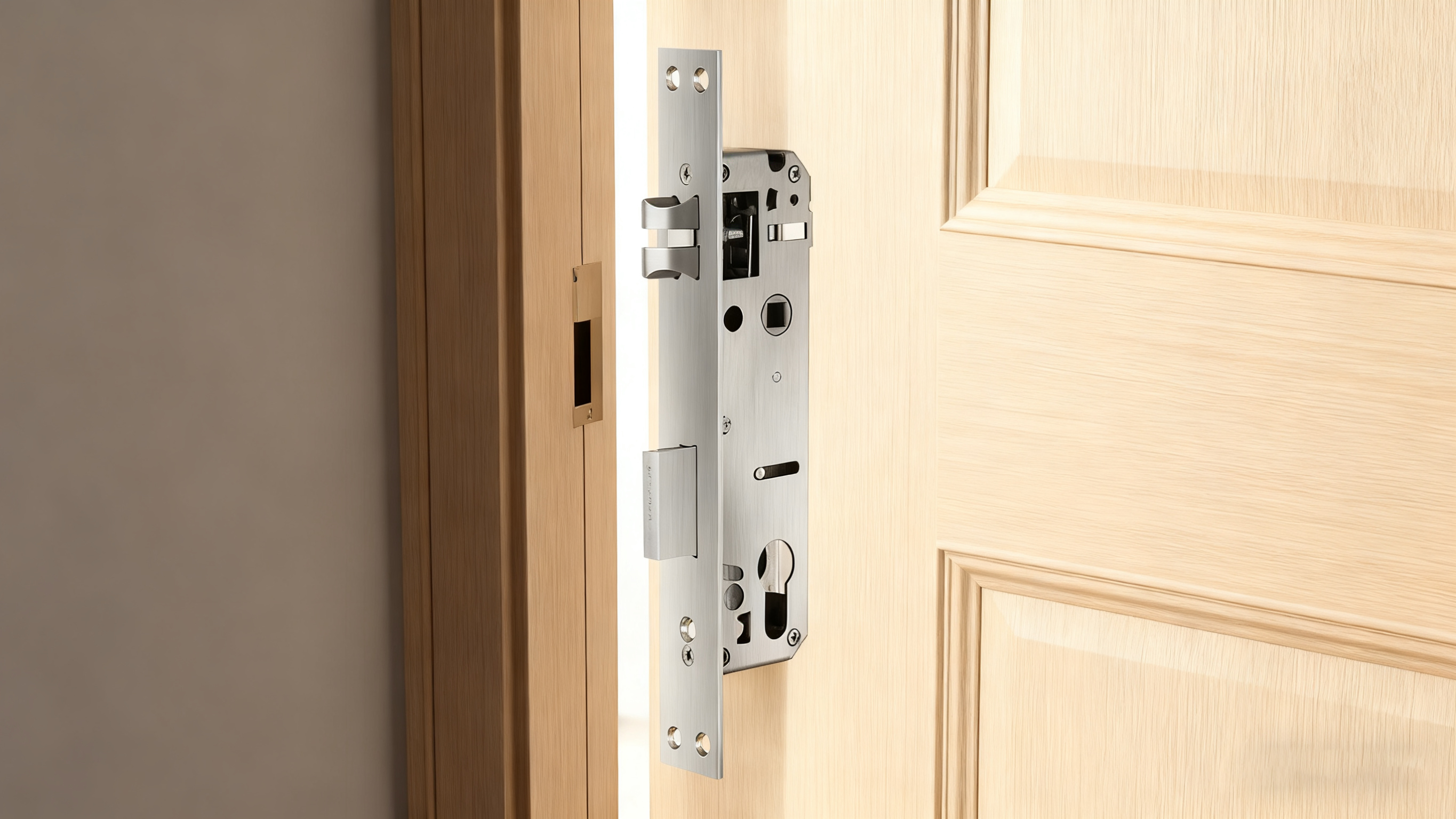
Before we dive into the measurements, it helps to confirm you are working with the right hardware. A mortice lock (often spelled "mortise" in American English, though "mortice" is common in many regions) is a lock that requires a pocket—the mortice—to be cut into the edge of the door. The lock body slides into this pocket, meaning the mechanism is hidden inside the door rather than sitting on the surface.
These are distinct from rim locks (which sit on the surface of the door) or tubular latches (which are cylindrical and much smaller). Mortice locks are generally considered more secure and robust, making them a popular choice for external doors and heavy-duty internal doors.
Understanding the "Backset"
The "backset" is the most critical dimension when replacing any lock. Simply put, the backset is the horizontal distance from the edge of the door to the center of the keyhole or the handle spindle (the square hole where the handle shaft goes through).
If you get this measurement wrong, your handle will not align with the lock mechanism, or your key won't reach the cylinder. Even a discrepancy of a few millimeters can render the lock unusable without ugly modifications to your door.
It is important to distinguish the backset from the case depth.
Buying a lock based on case depth alone is a common rookie mistake. Two locks can have the same total depth but different backsets depending on how the internal mechanism is arranged.
Tools You Will Need
You don't need a specialized toolkit to get this right. A few household basics will suffice:
Tape measure or ruler: A rigid ruler is often better for accuracy than a flexible tape.
Pencil: For marking if necessary.
Screwdriver: If you need to remove the lock for a precise measurement.
Method 1: Measuring with the Lock Installed
If you don't want to remove the lock from the door just yet, you can get a fairly accurate measurement while it is still installed. This method is best for a quick check.
Locate the edge: Open the door and locate the faceplate of the mortice lock. This is the metal plate visible on the edge of the door where the bolt comes out.
Find the center: Look at the side of the door where the handle or keyhole is. Visually identify the center of the keyhole or the center of the handle spindle.
Measure: Place your ruler against the edge of the door (flush with the faceplate). Measure the distance to the center of the keyhole.
Note on Rebated Doors: If your door has a "rebate" (a stepped edge, often found on double doors), be careful. You must measure from the faceplate of the lock, not the lip of the door that overlaps the frame.
Method 2: Measuring the Lock Body (The Accurate Way)
For the most precise measurement—and the one we recommend before you spend money—you should remove the mortice lock from the door. This eliminates parallax error and guessing where the "center" is.
Remove the furniture: Unscrew the handles and remove the spindle. If there is a thumb turn or cylinder, remove the retaining screw on the door edge and slide the cylinder out.
Unscrew the lock: Remove the two (or sometimes four) screws holding the faceplate into the door edge.
Slide it out: Gently pull the lock body out of the door pocket.
Measure from the faceplate: Hook your tape measure or ruler on the outer faceplate (the metal strip that sits flush with the door edge).
Measure to the follower: Measure the distance to the center of the "follower." The follower is the square hole that the handle spindle passes through. If it is a deadlock with no handle, measure to the center of the keyhole.
This number is your backset.
Common Standard Sizes
Mortice lock sizes vary by country and manufacturer, but they tend to follow standard increments.
Imperial Standards (Common in US/UK):
2 ½ inches (approx. 64mm): This is a very common size for internal doors.
3 inches (approx. 76mm): Often used when using knobs rather than levers, as it moves the hand further away from the door frame to prevent knuckles from scraping.
Metric Standards:
44mm or 45mm: Common for narrow stile doors, like those with glass panels.
57mm: A frequently used size in the UK and Europe for domestic locks.
82mm: A deeper size for specific architectural hardware.
If your measurement falls slightly off a standard number (e.g., you measure 56mm), it is likely a 57mm backset. Wear and tear or a loose tape measure can account for a millimeter of difference. However, if you measure 60mm and the standard is 45mm, you have a significant mismatch.
Mortice Sashlocks vs. Deadlocks
When measuring, it helps to know which type of mortice lock you have, as this confirms what you are measuring to.
Mortice Sashlock: This has a latch (operated by a handle) and a bolt (operated by a key). You should measure the backset to the center of the handle follower (the square hole). In most quality locks, the keyhole and the handle are vertically aligned, so the backset is the same for both.
Mortice Deadlock: This has no handle and is operated only by a key. In this case, you measure the backset to the center of the keyhole.
Why Faceplates Matter
While the backset is the most vital measurement for fit, don't ignore the faceplate. When you buy a replacement mortice lock, check if the faceplate is fixed or removable.
If you are lucky, the new lock might fit into the existing chiseled recess for the faceplate. If the new faceplate is larger, you will need to grab a chisel and enlarge the recess. If it is smaller, you will be left with unsightly gaps in the door edge that may need filling. While this doesn't affect the mechanics of the backset, it definitely affects the finish of your door.
Troubleshooting Tips
The "Knuckle Scrape" Problem
If you are installing a new door and deciding on a backset from scratch, consider the handle type. If you are using a round doorknob, a short backset (like 44mm or 2-1/2") might place the knob too close to the door frame. When you turn the knob, your knuckles might scrape against the door jamb. For knobs, a deeper backset (3" or 76mm) is usually preferred to give your hand clearance.
Old/Vintage Locks
If you live in an older property, you might find your lock doesn't match any modern standard backset. In this scenario, you have two choices:
Modify the door (drilling new holes) to accept a modern standard size.
Visit a specialist locksmith who can source replica vintage locks.
Secure Your Home with Confidence
Measuring a mortice lock backset isn't rocket science, but it does require precision. By taking the time to remove the lock and measure from the faceplate to the follower, you ensure a seamless replacement process.
No one enjoys returning to the hardware store three times in one afternoon. Get the backset right the first time, and your new lock will slot in perfectly, keeping your home secure and your doors looking professional.
Frequently Asked Questions
Does the backset include the thickness of the faceplate?
Yes. When measuring a loose lock, include the metal faceplate in your measurement, as this sits flush with the door edge. Do not measure from the casing behind the faceplate.
Can I change the backset of my lock?
Generally, no. Most mortice locks have a fixed case size. If you need a different backset, you must buy a new lock. Some tubular latches are adjustable, but traditional mortice locks are not.
What if my measurement is between sizes?
If you measure 56mm, it is almost certainly a 57mm backset. If you measure 45mm, it is a 44mm or 45mm standard. Manufacturing tolerances and imprecise rulers usually account for a 1-2mm difference. Always round to the nearest standard size.
Is the backset the same as the case depth?
No. The case depth is the total width of the lock that goes into the door. The backset is only the distance to the keyhole or handle center. The case depth will always be larger than the backset.
CE Mortice Lock
Mortice Lock
storeroom lock

 English
 العربية
 Français
 Русский
 Español
 Português
 Deutsch
 italiano
 日本語
日本語 한국어
한국어 Nederlands
 Tiếng Việt
 ไทย
ไทย Polski
 Türkçe
 አማርኛ
አማርኛ ພາສາລາວ
 ភាសាខ្មែរ
 Bahasa Melayu
 ဗမာစာ
ဗမာစာ தமிழ்
தமிழ் Filipino
 Bahasa Indonesia
 magyar
 Română
 Čeština
 Монгол
 қазақ
қазақ Српски
 हिन्दी
 فارسی
فارسی Kiswahili
 Slovenčina
 Slovenščina
 Norsk
Norsk Svenska
 українська
 Ελληνικά
 Suomi
Suomi Հայերեն
 עברית
עברית Latine
 Dansk
Dansk اردو
اردو Shqip
Shqip বাংলা
বাংলা Hrvatski
 Afrikaans
 Gaeilge
 Eesti keel
 Māori
Māori සිංහල
සිංහල नेपाली
 Oʻzbekcha
 latviešu
 অসমীয়া
 Aymara
 Azərbaycan dili
 Bamanankan
 Euskara
 Беларуская мова
 भोजपुरी
 Bosanski
 Български
 Català
 Cebuano
 Corsu
Corsu ދިވެހި
 डोग्रिड ने दी
 Esperanto
 Eʋegbe
 Frysk
Frysk Galego
 ქართული
 guarani
 ગુજરાતી
 Kreyòl ayisyen
 Hausa
Hausa ʻŌlelo Hawaiʻi
 Hmoob
Hmoob íslenska
 Igbo
Igbo Ilocano
 Basa Jawa
 ಕನ್ನಡ
ಕನ್ನಡ Kinyarwanda
 गोंगेन हें नांव
 Krio we dɛn kɔl Krio
 Kurdî
Kurdî Kurdî
Kurdî Кыргызча
 Lingala
 Lietuvių
 Oluganda
 Lëtzebuergesch
 Македонски
 मैथिली
 Malagasy
 മലയാളം
 Malti
Malti मराठी
मराठी ꯃꯦꯇꯥꯏ (ꯃꯅꯤꯄꯨꯔꯤ) ꯴.
 Mizo tawng
 Chichewa
 ଓଡ଼ିଆ
ଓଡ଼ିଆ Afaan Oromoo
 پښتو
پښتو ਪੰਜਾਬੀ
 Runasimi
 Gagana Samoa
 संस्कृत
 Gaelo Albannach
 Sepeti
 Sesotho
 chiShona
 سنڌي
سنڌي Soomaali
 Basa Sunda
 Wikang Tagalog
 Тоҷикӣ
 Татарча
 తెలుగు
 ትግንያውያን
 Xitsonga
 Türkmençe
 संस्कृत
 ئۇيغۇرچە
 Cymraeg
 isiXhosa
 ייִדיש
 Yorùbá
 isiZulu