Home security is rarely something we think about until something goes wrong. Perhaps your key has snapped in the door, the handle feels loose, or the latch simply refuses to catch. When you decide to replace your hardware, you might assume that a lock is just a lock. You head to the hardware store, grab a standard-looking box, and return home only to find the new unit doesn't fit the hole in your door.
This is a common frustration for DIY enthusiasts and homeowners. Unlike surface-mounted bolts, a mortice lock is embedded—or "morticed"—into the door itself. Because it sits inside a specific pocket of wood, the measurements need to be precise. If you get the size wrong, you are left with two bad options: chiseling out more wood (which weakens the door) or filling gaps with wood filler (which looks messy).
Getting the right measurements before you buy your replacement mortice lock set is the best way to save time and maintain your home's security. This guide will walk you through exactly what to measure and how to do it accurately.
Understanding Your Lock Type
Before you pull out the tape measure, identify exactly what kind of hardware you are working with. While there are many variations, most residential doors use one of two main types of mortice locks.
Mortice Sashlock
This is the most common type found on back doors or internal doors. A sashlock features a bolt (operated by a key) and a latch (operated by a handle). If your door has a handle that you push down to open, you are likely measuring a sashlock. When buying a replacement mortice lock set for this type, you need to match the position of both the handle spindle and the keyhole.
Mortice Deadlock
Deadlocks are simpler mechanisms often used on front doors for added security. They do not have a latch or a handle; they simply have a bolt operated by a key. Measuring these is slightly easier because you don't need to worry about the handle position, but the case dimensions are just as critical.
Step 1: Remove the Lock from the Door
While it is tempting to hold a ruler up against the door while the lock is still installed, this will rarely give you an accurate result. The faceplate often obscures the true depth of the lock case, leading to errors in judgment.
To get a 100% accurate reading, grab a screwdriver. Unscrew the retaining screws on the faceplate (the metal strip on the edge of the door). You will likely also need to remove the handle spindle and the cylinder screw if a Euro cylinder is fitted. Once loose, slide the entire lock body out of the door. Now you can measure the unit directly.
Step 2: Measure the Backset (The Most Critical Step)
If you only remember one thing from this guide, let it be the backset. This is the measurement that causes the most confusion and leads to the most returns at hardware stores.
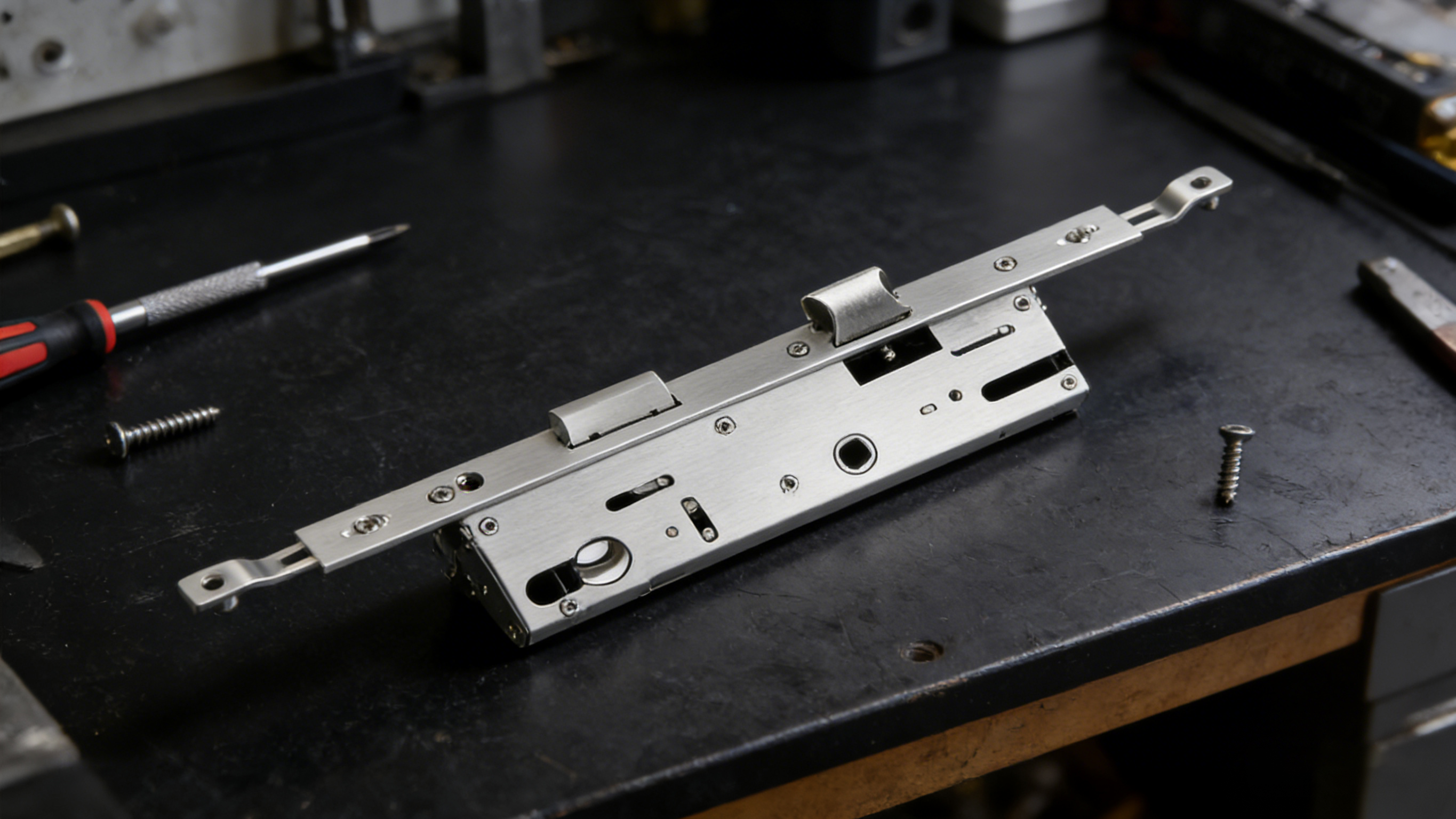
The backset is the horizontal distance from the front of the faceplate (the part flush with the door edge) to the center of the keyhole.
Common mistakes happen here because people measure the total width of the lock case. Do not do this. If you buy a lock based on the total width, the keyhole will not align with the existing hole in your door face.
Standard backset sizes generally fall into these categories:
44mm (1 ¾ inch): Common for internal doors or narrow frames.
57mm (2 ¼ inch): The standard for most residential external doors.
82mm or larger: Usually found on older properties with substantial timber doors.
Step 3: Measure the Centers (PZ Measurement)
If you are replacing a sashlock (the one with a handle), this step is mandatory. You need to know the distance between the operation points.
Measure the vertical distance from the center of the square hole (where the handle spindle goes) to the center of the keyhole (where the key turns). This distance is often referred to as the "PZ" measurement.
Standard measurements include:
57mm: Common for many older lever locks.
72mm: A standard for DIN locks (often found in commercial buildings or modern apartments).
92mm: Standard for multi-point locks on UPVC doors, though less common on wooden mortice locks.
If this measurement is off by even a few millimeters, your handle plate will not fit, or the spindle will bind, making the lock difficult to operate.
Step 4: Measure the Case Depth and Height
Once you have confirmed the backset and centers, you need to ensure the physical metal box (the case) will fit back into the hole in your wood.
Case Depth: This is the total horizontal width of the lock body, from the faceplate to the back edge. While the backset determines where the keyhole sits, the case depth determines if the lock fits into the mortice pocket. If your new lock is deeper than the old one, you will have to drill and chisel deeper into the door. If it is shallower, it may sit loosely.
Case Height: Measure the vertical height of the lock body. This is usually standard, but variations exist. Matching this ensures you don't have to chisel out the top or bottom of the mortice pocket.
1
Step 5: The Forend (Faceplate)
Finally, look at the metal strip that sits flush with the edge of the door. Measure the length and width of this plate.
If the new faceplate is larger than the old one, you can easily chisel out a small amount of wood to make it fit flush. However, if the new faceplate is smaller, you will be left with unsightly gaps in the door edge that will need filling.
You should also note the shape of the forend ends. Are they square or rounded? Buying a match here saves you the hassle of altering the recess in the door frame.
Frequently Asked Questions
What is the difference between a 2.5-inch and a 3-inch mortice lock?
This terminology refers to the total case depth, not the backset.
A 2.5-inch (64mm) lock usually has a backset of approximately 44mm.
A 3-inch (76mm) lock usually has a backset of approximately 57mm.
Always measure to be sure, but these are the general industry standards.
Can I replace a mortice lock without a key?
If the door is locked and you don't have the key, you cannot remove the lock without damaging the door or the mechanism. You will likely need a locksmith to open the door first. Once the door is open, you can remove the lock and measure it for replacement as described above.
What is a 5-lever mortice lock?
This refers to the internal security mechanism. A 5-lever lock is generally required by insurance companies for external doors because it is harder to pick or force open than a 3-lever lock. When measuring, the external dimensions are what matter for fitting, but check your insurance policy to see if you need to upgrade to a BS3621 rated 5-lever lock.
Getting the Fit Right
Taking five minutes to properly measure your hardware can save you an hour of frustration and a trip back to the shop. By focusing on the backset and the centers, you ensure that your new mortice lock set aligns perfectly with your door's existing holes.
Security is paramount, but so is a neat finish. With these measurements in hand, you can confidently purchase a replacement that slots straight in, restoring your home's security with minimal fuss.
Mortice Lock Set
Mortice Lock
Mortice Door Lock

 English
 العربية
 Français
 Русский
 Español
 Português
 Deutsch
 italiano
 日本語
日本語 한국어
한국어 Nederlands
 Tiếng Việt
 ไทย
ไทย Polski
 Türkçe
 አማርኛ
አማርኛ ພາສາລາວ
 ភាសាខ្មែរ
 Bahasa Melayu
 ဗမာစာ
ဗမာစာ தமிழ்
தமிழ் Filipino
 Bahasa Indonesia
 magyar
 Română
 Čeština
 Монгол
 қазақ
қазақ Српски
 हिन्दी
 فارسی
فارسی Kiswahili
 Slovenčina
 Slovenščina
 Norsk
Norsk Svenska
 українська
 Ελληνικά
 Suomi
Suomi Հայերեն
 עברית
עברית Latine
 Dansk
Dansk اردو
اردو Shqip
Shqip বাংলা
বাংলা Hrvatski
 Afrikaans
 Gaeilge
 Eesti keel
 Māori
Māori සිංහල
සිංහල नेपाली
 Oʻzbekcha
 latviešu
 অসমীয়া
 Aymara
 Azərbaycan dili
 Bamanankan
 Euskara
 Беларуская мова
 भोजपुरी
 Bosanski
 Български
 Català
 Cebuano
 Corsu
Corsu ދިވެހި
 डोग्रिड ने दी
 Esperanto
 Eʋegbe
 Frysk
Frysk Galego
 ქართული
 guarani
 ગુજરાતી
 Kreyòl ayisyen
 Hausa
Hausa ʻŌlelo Hawaiʻi
 Hmoob
Hmoob íslenska
 Igbo
Igbo Ilocano
 Basa Jawa
 ಕನ್ನಡ
ಕನ್ನಡ Kinyarwanda
 गोंगेन हें नांव
 Krio we dɛn kɔl Krio
 Kurdî
Kurdî Kurdî
Kurdî Кыргызча
 Lingala
 Lietuvių
 Oluganda
 Lëtzebuergesch
 Македонски
 मैथिली
 Malagasy
 മലയാളം
 Malti
Malti मराठी
मराठी ꯃꯦꯇꯥꯏ (ꯃꯅꯤꯄꯨꯔꯤ) ꯴.
 Mizo tawng
 Chichewa
 ଓଡ଼ିଆ
ଓଡ଼ିଆ Afaan Oromoo
 پښتو
پښتو ਪੰਜਾਬੀ
 Runasimi
 Gagana Samoa
 संस्कृत
 Gaelo Albannach
 Sepeti
 Sesotho
 chiShona
 سنڌي
سنڌي Soomaali
 Basa Sunda
 Wikang Tagalog
 Тоҷикӣ
 Татарча
 తెలుగు
 ትግንያውያን
 Xitsonga
 Türkmençe
 संस्कृत
 ئۇيغۇرچە
 Cymraeg
 isiXhosa
 ייִדיש
 Yorùbá
 isiZulu