Have you ever stood in the hardware store aisle, staring at two deadbolts that look identical but have drastically different price tags? One might cost $20, while the other is closer to $200. The difference isn't just branding or marketing fluff; it often comes down to what's happening inside the mechanism and the rigorous testing it has endured.
For business owners, facility managers, and security-conscious homeowners, knowing which lock to choose is critical. You wouldn't want a flimsy bedroom lock protecting your storefront, nor do you necessarily need an industrial-grade mortise lock for a bathroom door. This is where the ANSI lock grading system comes in—a standardized way to help you understand exactly how much security and durability you are buying.
Understanding the ANSI/BHMA Grading System
The American National Standards Institute (ANSI) and the Builders Hardware Manufacturers Association (BHMA) have established a set of standards to certify the quality of door hardware. These organizations put locks through a series of "torture tests" to see how they hold up against physical abuse, frequent use, and environmental factors.
Based on performance in these tests, locks are assigned a grade: 1, 2, or 3. This grading system strips away the guesswork, allowing buyers to compare products from different manufacturers on a level playing field.
How Locks Are Tested
A lock doesn't get a grade just by looking tough. It has to survive specific challenges in a laboratory setting. The three main pillars of testing include:
Operational Durability (Cycles): This measures longevity. A machine repeatedly turns the knob or lever and retracts the latch hundreds of thousands of times. If a lock jams or fails before hitting the minimum cycle count, it doesn't make the grade.
Security and Strength: These tests simulate break-in attempts. They include sledgehammer blows to the lock face, weight impacts to the door (the "kick-in" test), and torque tests where heavy wrenches attempt to twist the lock off the door.
Material and Finish: A lock is useless if it rusts shut. Hardware undergoes salt spray testing to ensure the finish can withstand humidity and weather without corroding or losing its aesthetic appeal.
1
ANSI Grade 1: The Gold Standard for Security
ANSI Grade 1 locks represent the highest level of security and durability available for standard door hardware. These are the heavyweights of the industry, designed to withstand punishment that would destroy lesser locks.
While typically reserved for commercial and industrial applications, many security-conscious homeowners install Grade 1 deadbolts on exterior doors for maximum peace of mind.
Key Characteristics of Grade 1:
Best for: High-traffic commercial buildings, schools, hospitals, industrial facilities, and high-security residential entry points.
Durability: Knobs and levers must survive 800,000 to 1 million operational cycles.
Strength: Must withstand 10 strikes of 75 pounds of force (simulating a violent kick or impact).
Security: Features superior resistance to picking, drilling, and prying.
If you are securing a facility where the door opens hundreds of times a day or where valuable assets are stored, ANSI grade 1 door locks are the non-negotiable choice.
ANSI Grade 2: The Commercial/Residential Hybrid
Sitting in the middle of the spectrum is ANSI Grade 2. These locks are often described as "light commercial" or "heavy-duty residential." They offer a significant step up from standard home hardware but aren't built for the relentless abuse of a busy public entrance.
Key Characteristics of Grade 2:
Best for: Apartment complex entrances, interior office doors, small businesses with moderate traffic, and residential exterior doors.
Durability: Must survive 400,000 cycles (knobs/levers).
Strength: Must withstand 5 blows of 75 pounds of force.
Security: Offers decent resistance to forced entry but less than Grade 1.
For many homeowners, a Grade 2 deadbolt strikes the perfect balance between cost and protection. It is strong enough to deter most opportunistic burglars without the premium price tag of commercial-grade hardware.
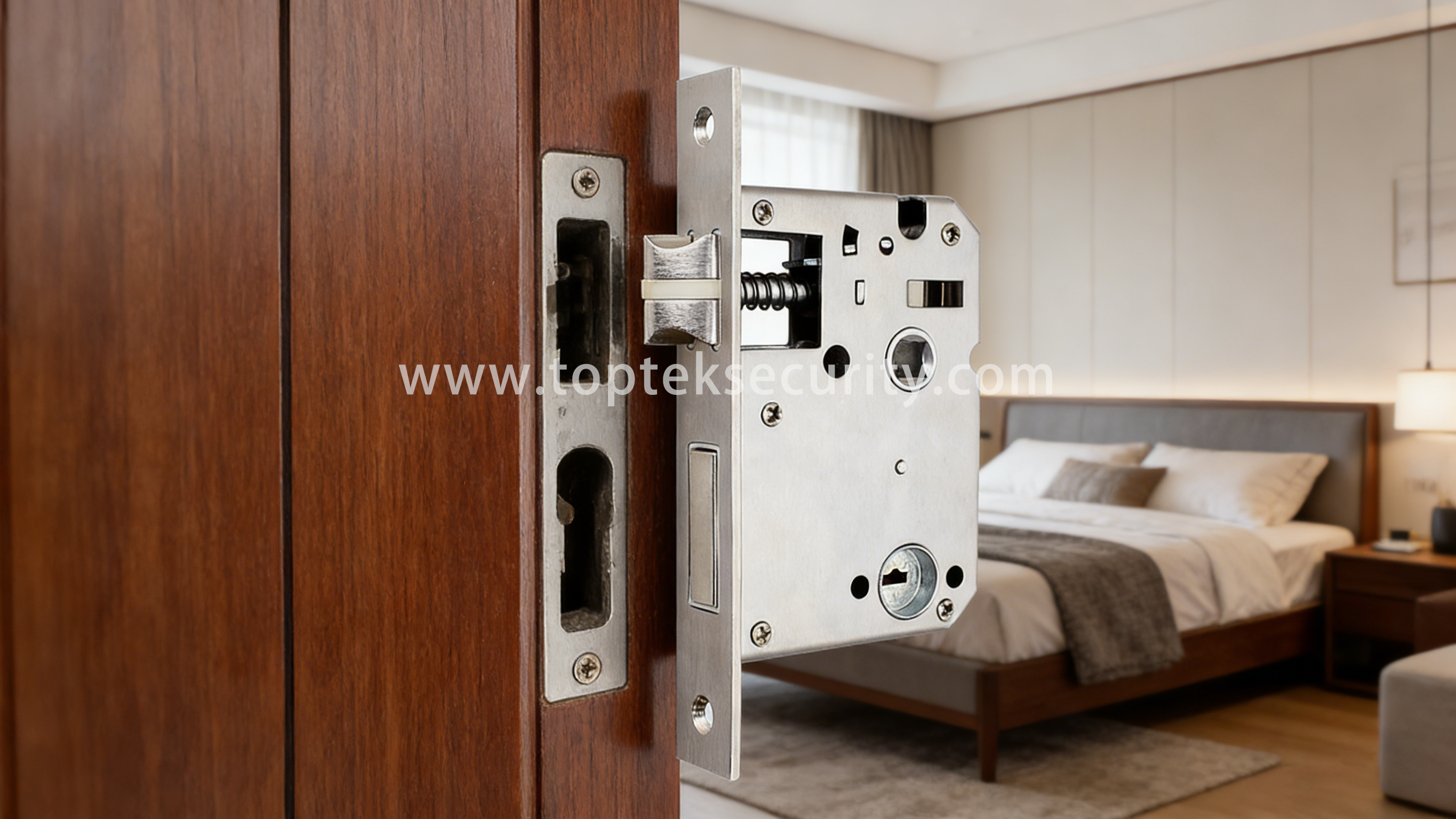
ANSI Grade 3: Standard Residential Security
At the bottom of the hierarchy is ANSI Grade 3. These are the standard consumer locks you find in most big-box stores. They are designed for residential use where security risks are low and traffic is minimal.
Key Characteristics of Grade 3:
Best for: Interior residential doors (bedrooms, bathrooms) and secondary exterior entrances.
Durability: Tested to 200,000 cycles.
Strength: Withstands 2 blows of 75 pounds.
Security: Minimal resistance to heavy force.
While Grade 3 locks are functional, they are not recommended for main entry points or businesses. A determined intruder can bypass a Grade 3 lock much faster than higher-grade alternatives.
Comparison Table: ANSI Grade 1 vs. Grade 2 vs. Grade 3
To help visualize the differences, here is a breakdown of the minimum performance requirements for each grade.
Feature | ANSI Grade 1 | ANSI Grade 2 | ANSI Grade 3 |
Primary Application | Commercial / Industrial | Light Commercial / Residential | Residential (Standard) |
Knob/Lever Cycles | 800,000 - 1,000,000 | 400,000 | 200,000 |
Deadbolt Cycles | 250,000 | 150,000 | 100,000 |
Door Impact Test | 10 blows (75 lbs) | 5 blows (75 lbs) | 2 blows (75 lbs) |
Forced Entry Resistance | High | Moderate | Low |
Typical Cost | $$$ | $$ | $ |
Choosing the Right Lock for Your Needs
Selecting the right hardware isn't always about buying the most expensive option; it's about matching the grade to the application.
When to Choose ANSI Grade 1 Locks
You should invest in ANSI Grade 1 door locks if:
High Traffic: The door is a main entrance to a public building, school, or hospital. Grade 2 locks will wear out mechanically too fast in these environments.
High Security: The door protects expensive inventory, sensitive data, or high-value residential property.
Vandalism Risk: The area is prone to break-in attempts or physical abuse.
When to Stick with Grade 2 or 3
You can save budget with lower grades if:
Low Traffic: It is a supply closet or private office that is rarely accessed.
Interior Use: Bedroom and bathroom privacy locks generally do not need to withstand sledgehammer attacks.
Budget Constraints: If Grade 1 is out of reach, a high-quality Grade 2 lock is a respectable alternative for residential exterior doors.
1
Frequently Asked Questions
Can I install an ANSI Grade 1 lock on my home front door?
Yes, absolutely. While Grade 1 locks are built for commercial use, many homeowners install Grade 1 deadbolts for superior protection against kick-ins and physical attacks. Just ensure the door frame is reinforced to match the strength of the lock.
Is ANSI the same as a UL fire rating?
No. ANSI grades refer to mechanical durability and security strength. A UL (Underwriters Laboratories) rating refers to fire safety. A "UL Listed" lock is certified to keep a door latched during a fire for a specific time (e.g., 3 hours). However, most commercial ANSI Grade 1 locks are also UL fire-rated.
How do I know if a lock is Grade 1?
Manufacturers will proudly display the BHMA/ANSI Grade 1 certification on the packaging. If the packaging does not specify a grade, it is likely a Grade 3 residential lock.
Security is an Investment
When it comes to securing your property, the ANSI lock grading system is your best tool for making an informed decision. It cuts through the marketing noise and tells you exactly how tough a lock really is.
While ANSI Grade 1 locks require a higher initial investment, their longevity and superior resistance to forced entry often make them the most cost-effective choice in the long run. Whether you are outfitting a university campus or upgrading your home security, choosing the right grade ensures your doors stay closed when it matters most.
ANSI Lock
ansi grade 1 locks
ansi grade 1 door locks

 English
 العربية
 Français
 Русский
 Español
 Português
 Deutsch
 italiano
 日本語
日本語 한국어
한국어 Nederlands
 Tiếng Việt
 ไทย
ไทย Polski
 Türkçe
 አማርኛ
አማርኛ ພາສາລາວ
 ភាសាខ្មែរ
 Bahasa Melayu
 ဗမာစာ
ဗမာစာ தமிழ்
தமிழ் Filipino
 Bahasa Indonesia
 magyar
 Română
 Čeština
 Монгол
 қазақ
қазақ Српски
 हिन्दी
 فارسی
فارسی Kiswahili
 Slovenčina
 Slovenščina
 Norsk
Norsk Svenska
 українська
 Ελληνικά
 Suomi
Suomi Հայերեն
 עברית
עברית Latine
 Dansk
Dansk اردو
اردو Shqip
Shqip বাংলা
বাংলা Hrvatski
 Afrikaans
 Gaeilge
 Eesti keel
 Māori
Māori සිංහල
සිංහල नेपाली
 Oʻzbekcha
 latviešu
 অসমীয়া
 Aymara
 Azərbaycan dili
 Bamanankan
 Euskara
 Беларуская мова
 भोजपुरी
 Bosanski
 Български
 Català
 Cebuano
 Corsu
Corsu ދިވެހި
 डोग्रिड ने दी
 Esperanto
 Eʋegbe
 Frysk
Frysk Galego
 ქართული
 guarani
 ગુજરાતી
 Kreyòl ayisyen
 Hausa
Hausa ʻŌlelo Hawaiʻi
 Hmoob
Hmoob íslenska
 Igbo
Igbo Ilocano
 Basa Jawa
 ಕನ್ನಡ
ಕನ್ನಡ Kinyarwanda
 गोंगेन हें नांव
 Krio we dɛn kɔl Krio
 Kurdî
Kurdî Kurdî
Kurdî Кыргызча
 Lingala
 Lietuvių
 Oluganda
 Lëtzebuergesch
 Македонски
 मैथिली
 Malagasy
 മലയാളം
 Malti
Malti मराठी
मराठी ꯃꯦꯇꯥꯏ (ꯃꯅꯤꯄꯨꯔꯤ) ꯴.
 Mizo tawng
 Chichewa
 ଓଡ଼ିଆ
ଓଡ଼ିଆ Afaan Oromoo
 پښتو
پښتو ਪੰਜਾਬੀ
 Runasimi
 Gagana Samoa
 संस्कृत
 Gaelo Albannach
 Sepeti
 Sesotho
 chiShona
 سنڌي
سنڌي Soomaali
 Basa Sunda
 Wikang Tagalog
 Тоҷикӣ
 Татарча
 తెలుగు
 ትግንያውያን
 Xitsonga
 Türkmençe
 संस्कृत
 ئۇيغۇرچە
 Cymraeg
 isiXhosa
 ייִדיש
 Yorùbá
 isiZulu