Choosing the right hardware for your door is about more than just aesthetics; it is the first line of defense for your property. When upgrading security or specifying hardware for a new building, you will likely encounter two main options: the standard cylindrical deadbolt and the mortise lock.
While both serve the purpose of keeping a door shut and secure, they function, install, and perform very differently. Understanding these distinctions is vital for architects, builders, and homeowners alike. This guide explores the mechanical and functional differences between these two locking systems to help you determine which solution fits your security needs.
What is a Cylindrical Deadbolt?
To understand the difference, we first need to define the most common lock found in residential homes: the cylindrical deadbolt.
A cylindrical lock gets its name from the installation method. To install one, you bore two circular holes into the door: one through the face of the door for the lock chassis and one through the edge for the latch bolt.
The deadbolt mechanism is separate from the door handle or knob. When you turn the key or thumb turn, a solid metal bolt extends from the lock body into the door frame (the strike plate). Because the bolt is "dead"—meaning it cannot be moved by spring action—it provides robust security against forced entry.
Key characteristics of a cylindrical deadbolt:
Installation: Requires simple circular bore holes.
Components: The latch and the locking mechanism are relatively separate.
Usage: Predominantly used in residential housing and light commercial applications.
1
What is a Mortise Lock?
A mortise lock represents a significant step up in complexity, durability, and security. Unlike the cylindrical lock, which sits through the door, a mortise lock fits inside the door.
A carpenter cuts a rectangular pocket—known as a mortise—into the edge of the door. A large, box-like lock body slides into this pocket. This housing contains the mechanics for the latch, the deadbolt, and the lever handle or knob, all integrated into a single unit.
Because the lock body is encased within the door itself, rather than just sitting in a hole bored through it, the structure is incredibly strong.
Key characteristics of a mortise lock:
Installation: Requires a precise rectangular pocket (mortise) cut into the door edge.
Components: An integrated chassis housing the latch, deadbolt, and lever mechanisms.
Usage: Standard in commercial buildings, hospitals, schools, and high-end residential properties.
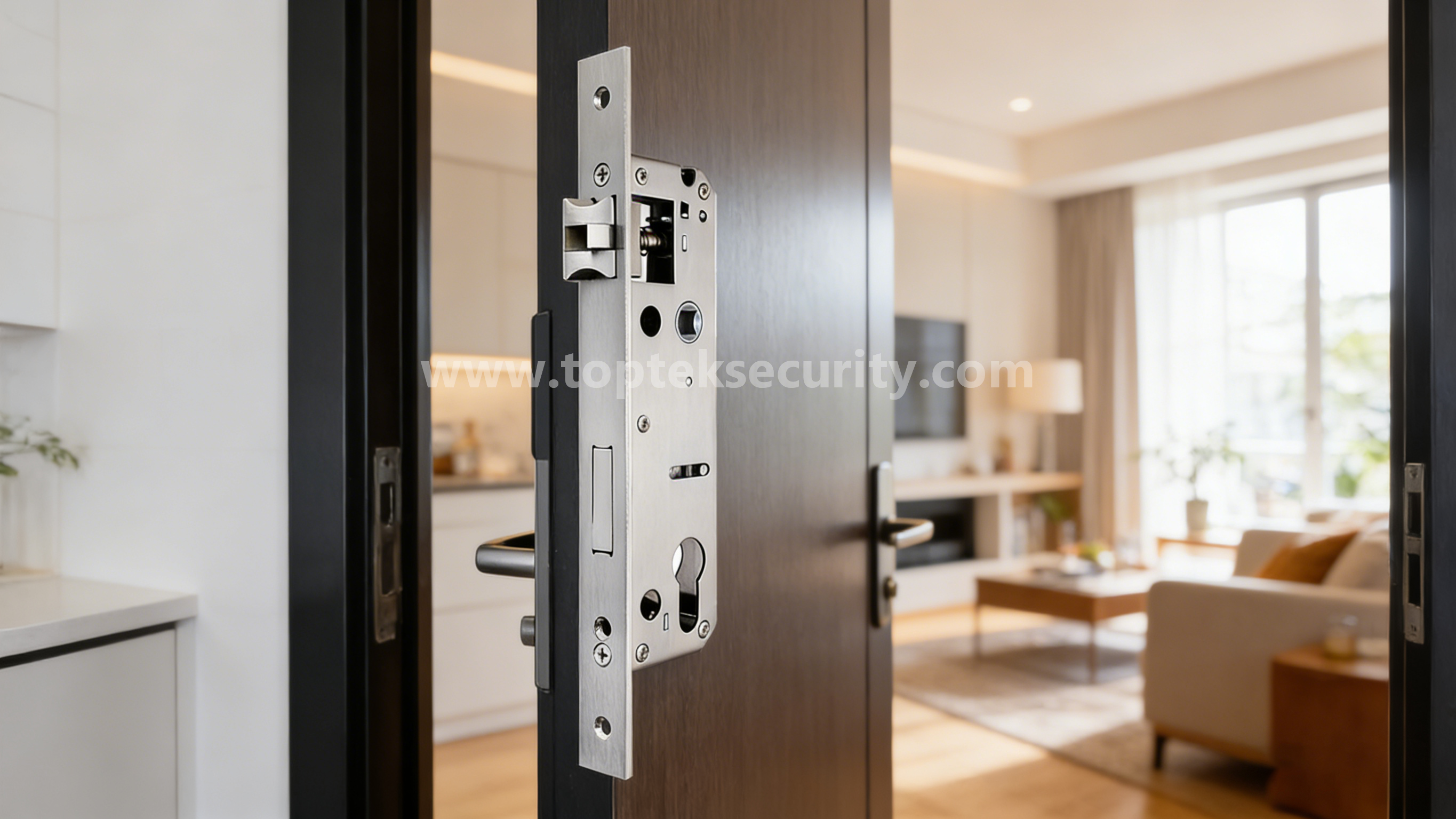
Comparison: Mortise Lock vs. Cylindrical Deadbolt
The primary difference lies in the mechanism design and how they interact with the door frame. However, the differences extend to security ratings, lifespan, and cost.
1. Security Strength
Generally, a mortise lock offers higher security than a standard cylindrical deadbolt. The mortise body is larger and housed within the door, making it more resistant to kick-ins and physical attacks. Furthermore, mortise deadbolts typically have a longer throw and are often made of reinforced steel.
Leading manufacturers like Zhongshan Toptek Security Technology Co., Ltd. specialize in high-security commercial mechanical mortise locks that meet strict international standards, including ANSI and EN certifications. These locks are engineered to withstand heavy abuse, making them the preferred choice for commercial security.
2. Durability and Lifespan
Cylindrical locks are reliable, but they have more moving parts that can wear down over time under heavy use. Mortise locks are built with heavy-duty return springs and solid internal components designed for high-traffic areas. This is why you see mortise locks in public buildings where doors are opened thousands of times a day.
3. Aesthetics and Functionality
Cylindrical locks are functional but limited in design. You typically have a deadbolt above and a knob/lever below.
Mortise locks offer a wide range of functions and architectural styles. Because the mechanism is hidden inside the door, manufacturers can offer sleek, ornate, or modern escutcheon plates. They also allow for diverse functions, such as "passage," "classroom," or "storeroom" functions, which control how the latch and deadbolt operate from the inside and outside.
Summary Table
To make the comparison clearer, here is a breakdown of the two systems:
Feature | Cylindrical Deadbolt | Mortise Lock |
Installation | Two circular bore holes (DIY friendly) | Rectangular pocket cut into door edge (Professional required) |
Security Level | Good (Grades 1-3 available) | Excellent (High structural integrity) |
Durability | Moderate (Residential standard) | High (Commercial standard) |
Cost | Affordable | Higher investment |
Door Weakness | Boring holes can weaken the door structure slightly | The lock body reinforces the door structure |
Aesthetics | Standard, separate components | Integrated, wide variety of architectural finishes |
What is a Mortise Deadbolt?
You may hear the term mortise deadbolt and wonder if it is a third category. A mortise deadbolt is simply the deadbolt component found within the mortise lock body.
In a cylindrical setup, the deadbolt is its own independent piece of hardware. In a mortise setup, the deadbolt is part of the cassette that slides into the door. However, standalone mortise deadbolts (without the latch/handle function) do exist for specific security applications where a secondary locking point is needed on a high-security door.
Replacing a Mortise Lock
One of the challenges property owners face is replacing a mortise lock. Because the door has been cut specifically to fit the dimensions of a mortise box, you cannot easily swap a mortise lock for a cylindrical deadbolt. Doing so would leave a large, empty cavity in the door edge that would need to be filled and reinforced—a difficult woodworking task that often ruins the door's appearance.
If you have a faulty mortise lock, the best course of action is to replace it with a new mortise lock of similar dimensions.
Steps for replacement consideration:
Measure the Faceplate: Check the width and length of the metal plate on the door edge.
Check the Backset: Measure the distance from the edge of the door to the center of the keyhole or handle.
Identify the Function: Does it lock from both sides? Does the handle retract the bolt?
1
For those sourcing hardware for large projects or maintenance, working with a specialized manufacturer is essential. Zhongshan Toptek Security Technology Co., Ltd. offers extensive options for replacing or upgrading commercial locks, ensuring you find the correct fit for American (ANSI) or European (EN) door preparations.
Which Lock Should You Choose?
The decision ultimately comes down to the application of the door and your budget.
Choose a Cylindrical Deadbolt if:
You are securing a standard residential home.
You have a limited budget.
You plan to install the lock yourself.
The door is already pre-bored with standard holes.
Choose a Mortise Lock if:
You are securing a commercial building, office, or luxury home.
Security and durability are your top priorities.
You want a lock that integrates the latch and deadbolt for a streamlined look.
You require specific commercial functions (like automatic latching).
1
Final Thoughts on Door Security
Whether you opt for the simplicity of a cylindrical deadbolt or the robust engineering of a mortise lock, quality matters. A cheap mortise lock may fail sooner than a high-quality cylindrical one. Always look for grade ratings and trusted manufacturers.
For commercial applications where fire ratings and heavy-duty cycles are non-negotiable, mortise locks remain the gold standard. By understanding the mechanical differences, you can ensure your property remains secure, functional, and aesthetically pleasing for years to come.
Mortise Deadbolt
mortise lock
replacing a mortise lock

 English
 العربية
 Français
 Русский
 Español
 Português
 Deutsch
 italiano
 日本語
日本語 한국어
한국어 Nederlands
 Tiếng Việt
 ไทย
ไทย Polski
 Türkçe
 አማርኛ
አማርኛ ພາສາລາວ
 ភាសាខ្មែរ
 Bahasa Melayu
 ဗမာစာ
ဗမာစာ தமிழ்
தமிழ் Filipino
 Bahasa Indonesia
 magyar
 Română
 Čeština
 Монгол
 қазақ
қазақ Српски
 हिन्दी
 فارسی
فارسی Kiswahili
 Slovenčina
 Slovenščina
 Norsk
Norsk Svenska
 українська
 Ελληνικά
 Suomi
Suomi Հայերեն
 עברית
עברית Latine
 Dansk
Dansk اردو
اردو Shqip
Shqip বাংলা
বাংলা Hrvatski
 Afrikaans
 Gaeilge
 Eesti keel
 Māori
Māori සිංහල
සිංහල नेपाली
 Oʻzbekcha
 latviešu
 অসমীয়া
 Aymara
 Azərbaycan dili
 Bamanankan
 Euskara
 Беларуская мова
 भोजपुरी
 Bosanski
 Български
 Català
 Cebuano
 Corsu
Corsu ދިވެހި
 डोग्रिड ने दी
 Esperanto
 Eʋegbe
 Frysk
Frysk Galego
 ქართული
 guarani
 ગુજરાતી
 Kreyòl ayisyen
 Hausa
Hausa ʻŌlelo Hawaiʻi
 Hmoob
Hmoob íslenska
 Igbo
Igbo Ilocano
 Basa Jawa
 ಕನ್ನಡ
ಕನ್ನಡ Kinyarwanda
 गोंगेन हें नांव
 Krio we dɛn kɔl Krio
 Kurdî
Kurdî Kurdî
Kurdî Кыргызча
 Lingala
 Lietuvių
 Oluganda
 Lëtzebuergesch
 Македонски
 मैथिली
 Malagasy
 മലയാളം
 Malti
Malti मराठी
मराठी ꯃꯦꯇꯥꯏ (ꯃꯅꯤꯄꯨꯔꯤ) ꯴.
 Mizo tawng
 Chichewa
 ଓଡ଼ିଆ
ଓଡ଼ିଆ Afaan Oromoo
 پښتو
پښتو ਪੰਜਾਬੀ
 Runasimi
 Gagana Samoa
 संस्कृत
 Gaelo Albannach
 Sepeti
 Sesotho
 chiShona
 سنڌي
سنڌي Soomaali
 Basa Sunda
 Wikang Tagalog
 Тоҷикӣ
 Татарча
 తెలుగు
 ትግንያውያን
 Xitsonga
 Türkmençe
 संस्कृत
 ئۇيغۇرچە
 Cymraeg
 isiXhosa
 ייִדיש
 Yorùbá
 isiZulu