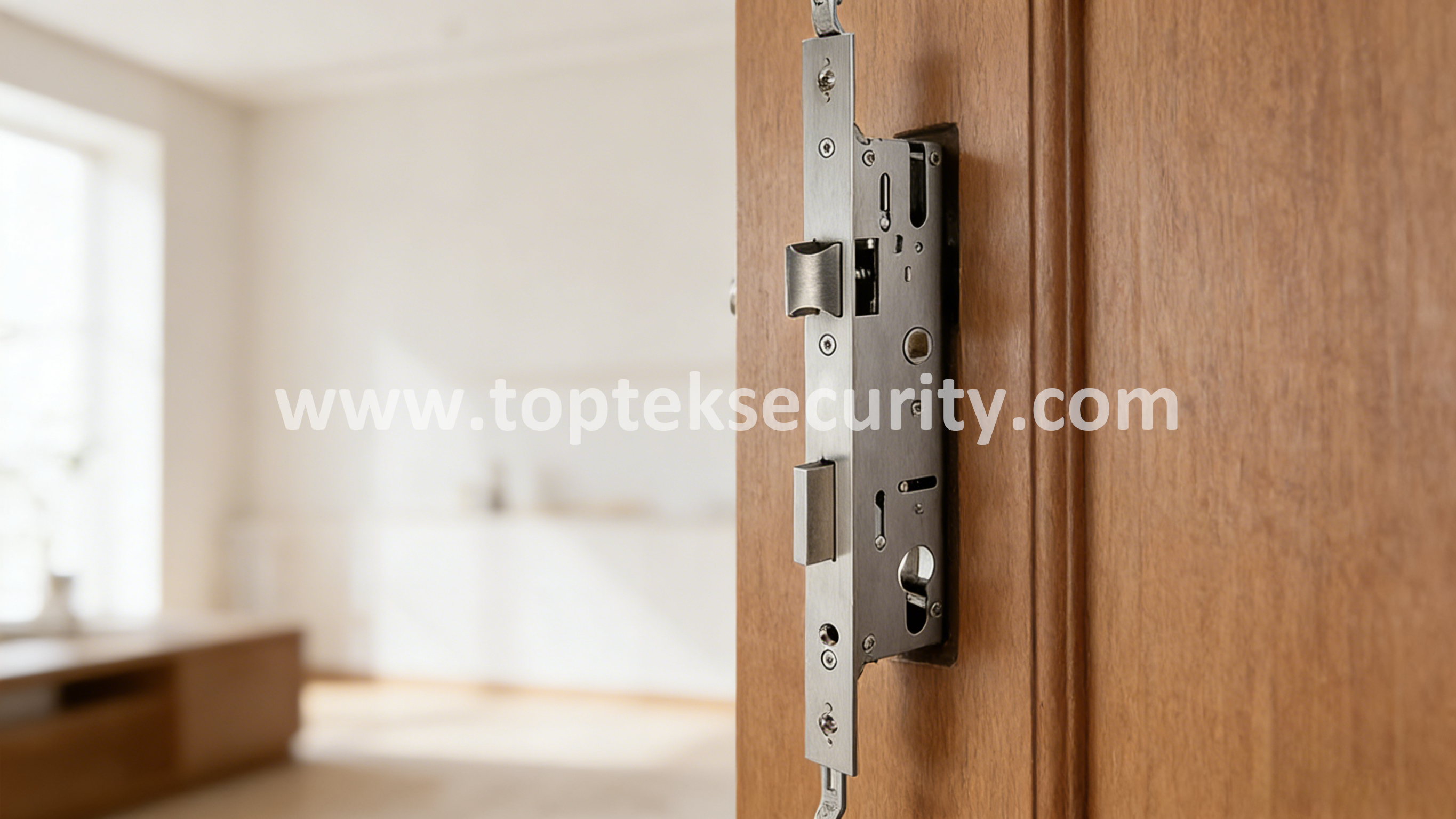
Mortise locks are a staple of security and craftsmanship in many homes, known for their durability and classic mechanism. But when it comes time to install, repair, or adjust one, you might hit a tiny, hexagonal snag: the set screw.
Finding the right Allen screw (also known as a set screw or grub screw) for a mortise lock can be surprisingly frustrating. These small components are crucial for securing the cylinder or the knobs, yet there is no single universal standard across every brand and model. If you’ve ever found yourself digging through a toolbox trying to find the one key that fits, you know the struggle.
This guide breaks down exactly what size Allen screws are commonly found in mortise locks, how to identify what you need, and why getting the size right matters for the longevity of your hardware.
What is a mortise lock set screw?
Before diving into sizes, it helps to know exactly what you are looking for. In a mortise lock assembly, the Allen screw—often called a set screw—serves a specific purpose. It is usually threaded into the faceplate or the knob/lever assembly to prevent the lock cylinder from unscrewing or the handle from becoming loose.
Unlike standard wood screws or machine screws with heads, these are typically headless and sit flush with or below the surface of the hardware once tightened. They require an Allen wrench (hex key) to drive them. Because they are often hidden for aesthetic reasons, they are easy to overlook until your doorknob starts jiggling or your cylinder needs changing.
What are the most common Allen screw sizes for mortise locks?
While there isn't one single size for every lock in existence, a few specific thread sizes dominate the market. If you are dealing with common residential or commercial hardware, the screw you need is likely one of the following.
The most frequent thread sizes for mortise lock cylinder set screws are 8-32 and 10-32. However, for knob or lever set screws, the sizes can vary more widely.
Below is a table outlining common applications and their corresponding screw sizes.
Application | Common Screw Thread Size | Allen Wrench Size Required |
Cylinder Set Screw | 8-32 | 5/64" or 3/32" |
Cylinder Set Screw | 10-32 | 3/32" or 1/8" |
Knob/Lever Set Screw | 1/4"-20 | 1/8" |
Knob/Lever Set Screw | 10-24 | 3/32" |
Thumbturn Set Screw | 6-32 | 1/16" |
Note: These are general standards. Vintage locks or imported European models may use metric sizing, such as M4 or M5 screws.
How do I determine which size I need?
Guessing the size of a tiny screw is a recipe for stripped threads and frustration. If you have lost the original screw or the existing one is damaged, here is a systematic way to figure out exactly what replacement you need.
1. Check the Manufacturer's Specifications
The most reliable method is to identify the brand of your mortise lock. Manufacturers like Baldwin, Schlage, Yale, and Emtek often have specific preferences.
Manufacturer | Typical Cylinder Screw Size | Typical Knob Screw Size |
Baldwin | 8-32 | 10-24 or 1/4"-20 |
Schlage | 10-32 | 1/4"-20 |
Yale | 8-32 | 8-32 or 10-32 |
Emtek | 8-32 | M4 or M5 (Metric) |
Marks USA | 10-32 | 10-32 |
2. The Trial and Error Method (Carefully)
If you have a collection of Allen wrenches, you can test the fit on the lock housing itself (if the screw is missing) or on the screw head (if you just need to tighten it).
If checking the screw head: The wrench should fit snugly with zero wiggle room. If it wobbles, the wrench is too small. If it won't enter, it's too big.
If checking the thread hole: Try threading a known screw size gently by hand. Never force it. If you feel resistance immediately, stop—you are likely crossing threads because the size is wrong.
3. Use a Thread Gauge
For the most accurate result, take the lock body or the old screw to a hardware store. Most stores have thread gauges mounted in the fastener aisle where you can screw your item in to identify the thread pitch and diameter instantly.
Why does the thread count matter?
You might wonder why you can't just jam a screw that looks "close enough" into the hole.
Allen screws are defined by two numbers: diameter and thread count (pitch). For example, in an 8-32 screw:
An 8-32 screw and an 8-36 screw have the exact same diameter, but the 8-36 has finer threads. If you try to force an 8-36 screw into an 8-32 hole, you will strip the soft brass or zinc internals of your expensive mortise lock body, potentially ruining the lock. Always ensure both numbers match.
Are there metric sizes for mortise locks?
Yes, especially if you have designer hardware or locks manufactured outside the United States. While US heritage brands typically stick to Imperial (SAE) sizes, modern architectural hardware often utilizes metric set screws.
Common metric sizes include:
M4 x 0.7: Often used in lever handles.
M5 x 0.8: Common for connecting screws or heavier-duty handle securement.
M6 x 1.0: Used in larger commercial applications.
If your standard Allen keys feel slightly "off"—either too loose or just barely too big—you are likely dealing with a metric screw. Switch to a metric hex key set to avoid stripping the head.
Where can I find replacement Allen screws for a mortise lock?
You don't always need to buy a specialized kit from a locksmith. Once you know the size (e.g., 8-32 x 3/8"), you can find these set screws in several places:
Local Hardware Stores: Look in the "specialty fasteners" drawers. They are usually sold as "socket set screws."
Locksmith Shops: They will likely have a bin full of spare parts specific to door hardware brands.
Online Fastener Suppliers: If you need a specific finish (like black oxide or stainless steel) or a specific point type (cup point vs. flat point), online retailers offer the best selection.
1
What type of point should the set screw have?
The "point" is the bottom tip of the screw. For mortise locks, the type of point matters for security and finish.
Cup Point: The most common. It has a cup-shaped indentation on the bottom that digs into the metal it is tightening against. This provides excellent grip but can mar the surface of the spindle or cylinder.
Flat Point: Has a flat bottom. It is used when you need to tighten against a surface without damaging it, though it offers slightly less holding power than a cup point.
Cone Point: Pointed like a pencil. Some lock knobs have a pre-drilled dimple in the spindle; a cone point screw fits perfectly into this dimple to lock the handle in place so it cannot rotate or slide off.
For most cylinder retention screws, a standard flat or cup point is acceptable. For door knobs that tend to wiggle loose, a cone point (if the spindle allows) or a knurled cup point offers the best hold.
Secure Your Hardware
Identifying the correct Allen screw size for your mortise lock might seem like a minor detail, but it’s the difference between a secure, functioning door and a handle that comes off in your hand. Whether it is a standard 8-32 for your cylinder or a 1/4"-20 for your lever, taking the time to measure and match the thread will save you time and preserve your hardware.
When in doubt, bring the old screw or the lock body to a professional. A quick check at a hardware store is far cheaper than replacing a stripped mortise lock body.
mortise lock sizes
mortise lock
mortise lock set

 English
 العربية
 Français
 Русский
 Español
 Português
 Deutsch
 italiano
 日本語
日本語 한국어
한국어 Nederlands
 Tiếng Việt
 ไทย
ไทย Polski
 Türkçe
 አማርኛ
አማርኛ ພາສາລາວ
 ភាសាខ្មែរ
 Bahasa Melayu
 ဗမာစာ
ဗမာစာ தமிழ்
தமிழ் Filipino
 Bahasa Indonesia
 magyar
 Română
 Čeština
 Монгол
 қазақ
қазақ Српски
 हिन्दी
 فارسی
فارسی Kiswahili
 Slovenčina
 Slovenščina
 Norsk
Norsk Svenska
 українська
 Ελληνικά
 Suomi
Suomi Հայերեն
 עברית
עברית Latine
 Dansk
Dansk اردو
اردو Shqip
Shqip বাংলা
বাংলা Hrvatski
 Afrikaans
 Gaeilge
 Eesti keel
 Māori
Māori සිංහල
සිංහල नेपाली
 Oʻzbekcha
 latviešu
 অসমীয়া
 Aymara
 Azərbaycan dili
 Bamanankan
 Euskara
 Беларуская мова
 भोजपुरी
 Bosanski
 Български
 Català
 Cebuano
 Corsu
Corsu ދިވެހި
 डोग्रिड ने दी
 Esperanto
 Eʋegbe
 Frysk
Frysk Galego
 ქართული
 guarani
 ગુજરાતી
 Kreyòl ayisyen
 Hausa
Hausa ʻŌlelo Hawaiʻi
 Hmoob
Hmoob íslenska
 Igbo
Igbo Ilocano
 Basa Jawa
 ಕನ್ನಡ
ಕನ್ನಡ Kinyarwanda
 गोंगेन हें नांव
 Krio we dɛn kɔl Krio
 Kurdî
Kurdî Kurdî
Kurdî Кыргызча
 Lingala
 Lietuvių
 Oluganda
 Lëtzebuergesch
 Македонски
 मैथिली
 Malagasy
 മലയാളം
 Malti
Malti मराठी
मराठी ꯃꯦꯇꯥꯏ (ꯃꯅꯤꯄꯨꯔꯤ) ꯴.
 Mizo tawng
 Chichewa
 ଓଡ଼ିଆ
ଓଡ଼ିଆ Afaan Oromoo
 پښتو
پښتو ਪੰਜਾਬੀ
 Runasimi
 Gagana Samoa
 संस्कृत
 Gaelo Albannach
 Sepeti
 Sesotho
 chiShona
 سنڌي
سنڌي Soomaali
 Basa Sunda
 Wikang Tagalog
 Тоҷикӣ
 Татарча
 తెలుగు
 ትግንያውያን
 Xitsonga
 Türkmençe
 संस्कृत
 ئۇيغۇرچە
 Cymraeg
 isiXhosa
 ייִדיש
 Yorùbá
 isiZulu