If you've ever used a keycard to open a door in an office, hospital, or school, you've likely encountered an electrified mortise lock. These sophisticated locking systems are a cornerstone of modern access control, combining the robust physical security of a traditional mortise lock with the convenience and intelligence of electronic access. But how exactly do they operate to keep spaces secure yet accessible?
This guide will explain the mechanics and technology behind electrified mortise locks. We will cover their core components, explore how they function in different scenarios, and highlight the benefits they offer over traditional mechanical locks. Understanding how these locks work is the first step toward implementing a more secure and efficient access control system for any commercial or institutional building.
What is an Electrified Mortise Lock?
At its core, an electrified mortise lock is a mechanical lock that has been adapted to be controlled electronically. A standard mortise lock is a heavy-duty lock that is installed into a pocket—or mortise—cut into the edge of a door. It's known for its strength and durability.
The "electrified" version adds electrical components that allow the lock's lever handle to be controlled remotely. This means that instead of always needing a physical key, the lock can be engaged or disengaged by an access control system, such as a card reader, keypad, or biometric scanner.
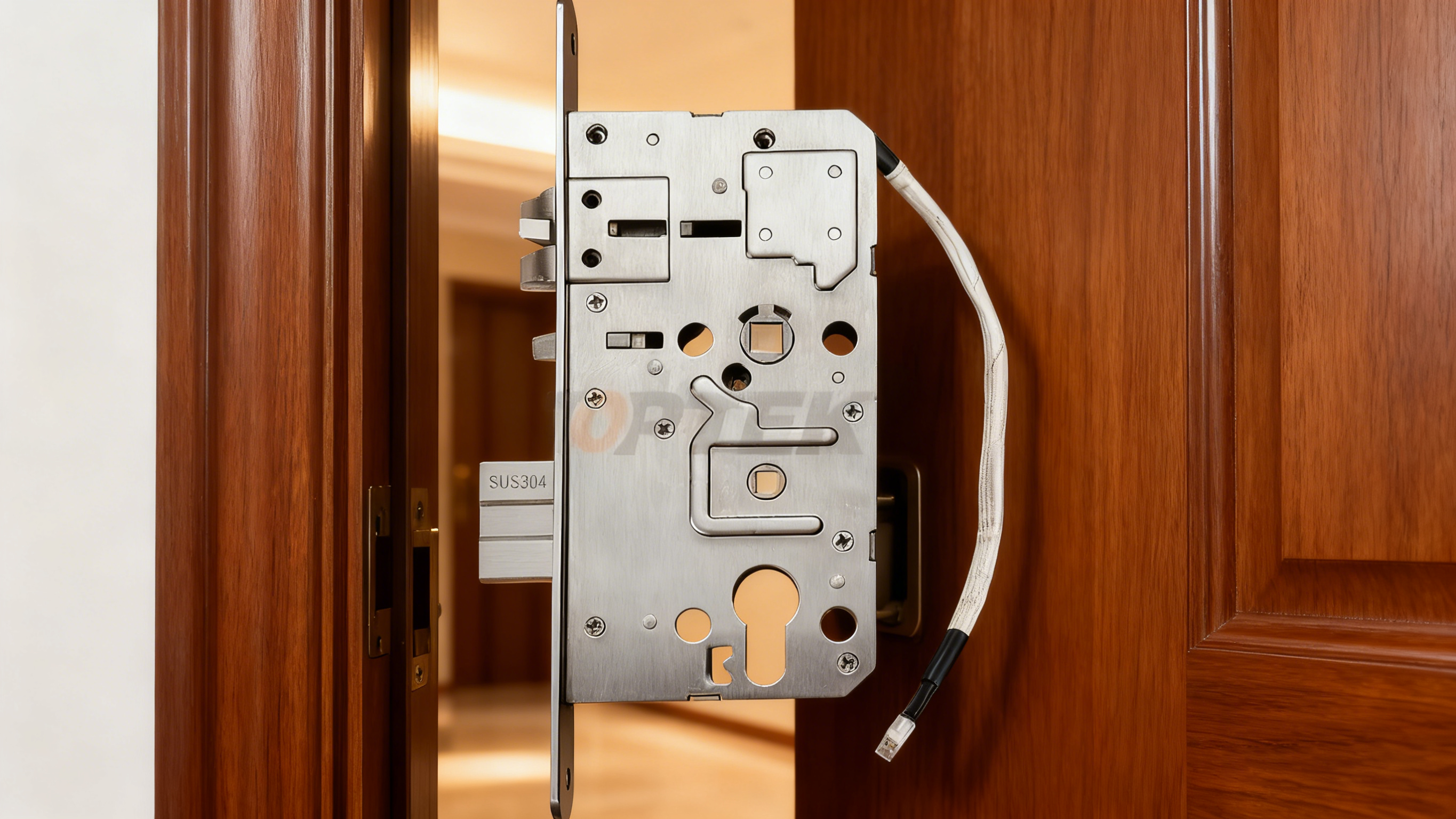
The key components of an electrified mortise lock include:
Lock Body: The main part of the lock that fits inside the door mortise. It houses the latch, deadbolt, and internal mechanical parts.
Solenoid or Motor: This is the electromechanical component that controls the locking mechanism. When it receives an electrical signal, it either locks or unlocks the outside lever.
Lever Handles: The handles on both the inside and outside of thedoor. The outside lever is typically the one controlled by the electronic system.
Monitoring Switches: These sensors provide real-time status updates to the access control system, indicating if the door is open or closed, latched, or if the deadbolt is engaged.
Power Source: The lock requires a low-voltage DC power supply, which is usually connected to the building's main electrical system and often has a battery backup.
The Mechanics: How Electrification Controls the Lock
The magic of an electrified mortise lock lies in its ability to control the outside lever handle. This is achieved through two primary operational modes: Fail Safe and Fail Secure. The mode is determined by the needs of the facility and is a critical consideration for security and life safety.
Fail Safe Configuration
In a Fail Safe configuration, the lock requires power to remain locked. When the power is turned off or cut—for instance, during a power outage or when a fire alarm is triggered—the outside lever automatically unlocks, allowing free entry.
How it works: When power is applied, a solenoid or motor holds a component in place that keeps the outside lever rigid and unable to retract the latch. When the power is removed, this component releases, and the lever becomes operational, allowing anyone to open the door from the outside.
Common Use Cases: Fail Safe locks are typically used for interior doors that need to allow emergency personnel access during a crisis. They are often found on doors leading to secure areas within a building where preventing people from being trapped inside is the top priority.
Fail Secure Configuration
In a Fail Secure configuration, the lock remains locked even without power. Power is required to unlock the door.
How it works: When power is off, the outside lever is locked and cannot operate the latch. To unlock the door, the access control system sends an electrical signal to the lock, which activates the solenoid or motor. This allows the lever to be turned to retract the latch.
Common Use Cases: Fail Secure locks are used for perimeter security and high-value areas where maintaining security is the primary concern, even during a power failure. Examples include main entrance doors, IT server rooms, and storage areas for sensitive materials.
In both configurations, the inside lever handle always allows for free egress (exit), a critical life safety feature often referred to as a panic function. This ensures that people can exit a room or building quickly in an emergency without needing a key or special knowledge.
Integration with Access Control Systems
An electrified mortise lock doesn't work in isolation. It is a key component of a broader access control system. Here’s a step-by-step look at a typical interaction:
Credential Presentation: A user presents their credential (e.g., keycard, fob, or PIN) to a reader installed near the door.
Signal to Controller: The reader sends the credential information to an access control panel or controller.
Verification: The controller checks the user's permissions against its database. It verifies if the user is authorized to enter at that specific time.
Command to Lock: If the credential is valid, the controller sends an electrical signal to the electrified mortise lock.
Lock Actuation: The lock receives the signal and, depending on its configuration (Fail Safe or Fail Secure), either removes or applies power to unlock the outside lever.
Access Granted: The user can now turn the handle to retract the latch and open the door. The lock will automatically re-lock after the door closes or after a predetermined amount of time.
Advanced systems also feature tamper resistance and advanced encryption to protect against unauthorized access attempts and ensure the integrity of the communication between the lock and the controller.
Built for Performance and Durability
Modern electrified mortise locks are designed for high-traffic, demanding environments like schools, hospitals, and commercial buildings. They are typically constructed from robust materials like stainless steel to withstand constant use.
Many high-quality locks include an anti-friction mechanism. This feature reduces the friction between the latch bolt and the strike plate on the door frame. The result is a smoother, quieter operation that minimizes wear and tear, significantly extending the lifespan of the lock.
The Right Choice for Modern Security
Electrified mortise locks provide a powerful combination of physical strength, electronic intelligence, and user convenience. By integrating the time-tested security of a mortise lock with the flexibility of modern access control, they offer a scalable and highly effective solution for managing access in any facility. Whether you need to secure a single office or an entire campus, understanding how these locks work is essential for designing a system that delivers robust security and superior performance.
Electrified Mortise Lock
Electrified Mortise
European-standard Door lock

 English
 العربية
 Français
 Русский
 Español
 Português
 Deutsch
 italiano
 日本語
日本語 한국어
한국어 Nederlands
 Tiếng Việt
 ไทย
ไทย Polski
 Türkçe
 አማርኛ
አማርኛ ພາສາລາວ
 ភាសាខ្មែរ
 Bahasa Melayu
 ဗမာစာ
ဗမာစာ தமிழ்
தமிழ் Filipino
 Bahasa Indonesia
 magyar
 Română
 Čeština
 Монгол
 қазақ
қазақ Српски
 हिन्दी
 فارسی
فارسی Kiswahili
 Slovenčina
 Slovenščina
 Norsk
Norsk Svenska
 українська
 Ελληνικά
 Suomi
Suomi Հայերեն
 עברית
עברית Latine
 Dansk
Dansk اردو
اردو Shqip
Shqip বাংলা
বাংলা Hrvatski
 Afrikaans
 Gaeilge
 Eesti keel
 Māori
Māori සිංහල
සිංහල नेपाली
 Oʻzbekcha
 latviešu
 অসমীয়া
 Aymara
 Azərbaycan dili
 Bamanankan
 Euskara
 Беларуская мова
 भोजपुरी
 Bosanski
 Български
 Català
 Cebuano
 Corsu
Corsu ދިވެހި
 डोग्रिड ने दी
 Esperanto
 Eʋegbe
 Frysk
Frysk Galego
 ქართული
 guarani
 ગુજરાતી
 Kreyòl ayisyen
 Hausa
Hausa ʻŌlelo Hawaiʻi
 Hmoob
Hmoob íslenska
 Igbo
Igbo Ilocano
 Basa Jawa
 ಕನ್ನಡ
ಕನ್ನಡ Kinyarwanda
 गोंगेन हें नांव
 Krio we dɛn kɔl Krio
 Kurdî
Kurdî Kurdî
Kurdî Кыргызча
 Lingala
 Lietuvių
 Oluganda
 Lëtzebuergesch
 Македонски
 मैथिली
 Malagasy
 മലയാളം
 Malti
Malti मराठी
मराठी ꯃꯦꯇꯥꯏ (ꯃꯅꯤꯄꯨꯔꯤ) ꯴.
 Mizo tawng
 Chichewa
 ଓଡ଼ିଆ
ଓଡ଼ିଆ Afaan Oromoo
 پښتو
پښتو ਪੰਜਾਬੀ
 Runasimi
 Gagana Samoa
 संस्कृत
 Gaelo Albannach
 Sepeti
 Sesotho
 chiShona
 سنڌي
سنڌي Soomaali
 Basa Sunda
 Wikang Tagalog
 Тоҷикӣ
 Татарча
 తెలుగు
 ትግንያውያን
 Xitsonga
 Türkmençe
 संस्कृत
 ئۇيغۇرچە
 Cymraeg
 isiXhosa
 ייִדיש
 Yorùbá
 isiZulu