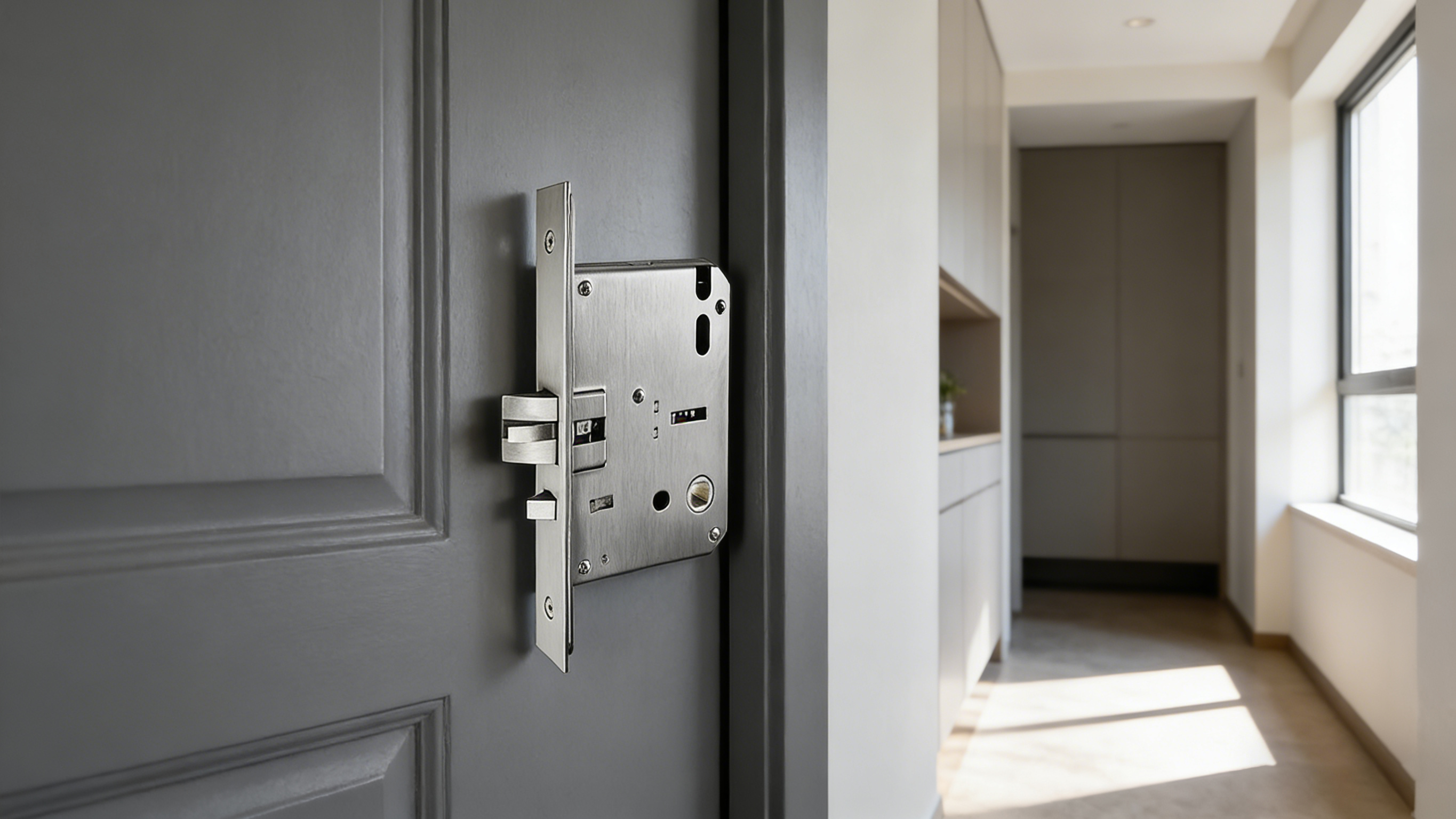
Installing a deadbolt is one of the most effective ways to upgrade your home or office security. While many modern doors come pre-drilled, custom installations or replacements often require cutting a mortise—a recessed pocket in the door edge—to house the lock mechanism.
If you are a DIY enthusiast or a facility manager looking to handle an installation, getting the mortise right is critical. A poorly cut mortise can lead to a lock that sticks, a door that doesn't close properly, or a compromised security system.
This guide walks you through the precise steps to cut a mortise for a deadbolt lock, ensuring a flush, professional fit that functions smoothly.
What is a mortise deadbolt?
Before picking up a chisel, it is helpful to understand the hardware. A mortise deadbolt differs from a standard cylindrical deadbolt. In a standard setup, the bolt slides into a simple hole in the door edge. In a true mortise lock setup (common in commercial settings and high-end residential doors), the entire lock body slides into a large rectangular pocket (the mortise) cut into the door.
However, even standard deadbolts require a small mortise on the door edge for the faceplate (the rectangular metal plate surrounding the bolt) to sit flush with the wood. This guide focuses on cutting the mortise for the faceplate of a standard deadbolt, as well as the deeper pocket required for the bolt mechanism.
Tools you will need
To achieve a clean cut, you need the right tools. Using makeshift tools often results in splintered wood and gaps.
Tool | Purpose |
Power Drill | For drilling the main hole for the bolt. |
Spade Bit or Hole Saw | To remove the bulk of the wood. Size depends on your lock (usually 1 inch). |
Sharp Wood Chisel | Ideally 1-inch or 3/4-inch width for carving the faceplate recess. |
Hammer | For driving the chisel. |
Utility Knife | To score the wood fibers and prevent splintering. |
Square & Pencil | For marking precise lines. |
Masking Tape | To mark depth on your drill bits. |
Safety Goggles | To protect eyes from flying wood chips. |
Step 1: Mark the door edge
Precision starts with accurate marking. Most deadbolt kits come with a paper template, but relying solely on paper can lead to errors if it slips.
Determine the Height: Standard height for a deadbolt is usually 6 to 12 inches above the handle, or roughly 60 inches from the floor.
Find the Center: Measure the thickness of the door (usually 1 3/4 inches or 1 3/8 inches) and mark the exact center line on the door edge.
Use the Faceplate: Once the main cylinder hole is drilled (which goes through the face of the door), insert the bolt assembly into the edge hole. Trace around the rectangular faceplate with a sharp pencil. Ensure the faceplate is perfectly vertical using a small square.
1
Step 2: Score the outline
Wood fibers have a tendency to tear or splinter if you attack them directly with a chisel or router. Scoring cuts the fibers cleanly at the surface.
Take your utility knife and run it along the pencil lines you just drew for the faceplate. Apply firm pressure to cut into the wood surface. This "stop cut" creates a barrier that prevents the chisel from removing wood outside the designated area, ensuring crisp edges.
Step 3: Drill the bolt hole
If you haven't already drilled the hole for the bolt mechanism itself, do this before chiseling the faceplate recess.
Select the Right Bit: Use a spade bit or hole saw that matches the manufacturer's instructions (typically 7/8 inch or 1 inch).
Drill Straight: Position the drill bit on your center mark on the door edge. It is crucial to drill perfectly straight and level. If the drill angles up or down, the bolt won't align with the strike plate on the jamb.
Clear Debris: Drill to the depth required for the bolt mechanism to fully seat.
1
Step 4: Chisel the mortise for the faceplate
This is the step requiring the most finesse. The goal is to remove just enough wood so the metal faceplate sits perfectly flush with the door edge.
Establishing the depth
Hold the faceplate against the side of the door to gauge its thickness. You want to remove wood equal to this thickness (usually about 1/8 inch).
The chiseling process
Create Relief Cuts: Holding the chisel with the bevel side down, make a series of vertical cuts (perpendicular to the grain) inside your scored outline. Space them about 1/8 inch apart. Do not go deeper than the thickness of the faceplate.
Remove the Waste: Turn the chisel so the flat side is against the wood. Start from the center of the hole and push toward your scored lines to shave off the wood chips.
Par the Edges: Carefully clean up the corners and edges. The chisel should slice, not pry. If you have to use excessive force, your chisel may be dull.
Pro Tip: Test the fit frequently. It is easy to take more wood off, but you cannot put it back. The faceplate should fit snugly without being forced.
Step 5: Install and test
Once the mortise is cut, insert the bolt assembly.
Check for Flushness: Run your finger over the faceplate. It should feel smooth against the door edge. If it protrudes, remove it and pare away slightly more wood. If it sinks too deep, shim it with a piece of thin cardboard or wood veneer behind the plate.
Secure with Screws: Pilot drill the screw holes to prevent the wood from splitting, then drive the screws in.
Test the Bolt: Extend and retract the bolt. It should move freely. If it binds, the internal hole may need to be widened slightly, or the plate may be crooked.
When to call a professional
While cutting a mortise for a standard deadbolt is a manageable DIY project, full commercial mortise locks are a different beast. These require deep, large pockets cut into the core of the door, often necessitating specialized jigs and routers.
If you are dealing with fire-rated doors, heavy-duty commercial security, or specialized electronic locks, it is often safer to consult hardware specialists. Companies like Zhongshan Toptek Security Technology Co., Ltd. specialize in mechanical and electrified hardware solutions. With over 30 years of experience and a massive 15,000-square-meter factory, Toptek provides high-quality mortise locks that comply with strict international standards like CE, UL, and ANSI.
Whether you need detailed advice on hardware selection or OEM/ODM services for a large project, leveraging the expertise of a dedicated manufacturer ensures your security infrastructure is built to last.
Frequently Asked Questions
Can I use a router instead of a chisel?
Yes. A trim router with a straight bit is excellent for cutting mortises, especially if you have a template or jig. It produces a very clean, flat bottom. However, you will still need a sharp chisel to square off the rounded corners left by the router bit.
What if I chisel too deep?
If you accidentally remove too much material and the faceplate sits below the surface of the door, don't panic. You can use a wood shim, a piece of cardboard (like a cereal box), or even specialized plastic spacers behind the faceplate to bring it back up to flush level.
Do I need to cut a mortise for drive-in latches?
No. Some deadbolts come with a "drive-in" collar option. These are circular and have ridges that grip the wood inside the 1-inch hole. They do not require a rectangular faceplate or a chiseled mortise. You simply tap them into place with a hammer and a block of wood. Check your lock kit to see if this is an option.
How do I maintain my chisel for the best results?
A dull chisel is dangerous and ineffective. Sharpen your chisel using a whetstone or diamond plate before starting. A sharp tool requires less force and cuts the wood fibers cleanly, reducing the chance of slipping and damaging the door.
Conclusion
Cutting a clean mortise is a mark of craftsmanship. By measuring twice, scoring your lines, and chiseling patiently, you ensure your deadbolt looks great and functions securely.
If your project involves complex commercial requirements or you are looking for high-volume, certified hardware solutions, consider reaching out to industry leaders. Zhongshan Toptek Security Technology Co., Ltd. offers a comprehensive range of commercial mechanical door locks, electric lock cases, and access control systems designed to meet rigorous safety and durability standards. Visit their website to explore their product range or request a quote for your next project.
mortise deadbolt
Mortise Deadbolt Lock
replacing a mortise lock

 English
 العربية
 Français
 Русский
 Español
 Português
 Deutsch
 italiano
 日本語
日本語 한국어
한국어 Nederlands
 Tiếng Việt
 ไทย
ไทย Polski
 Türkçe
 አማርኛ
አማርኛ ພາສາລາວ
 ភាសាខ្មែរ
 Bahasa Melayu
 ဗမာစာ
ဗမာစာ தமிழ்
தமிழ் Filipino
 Bahasa Indonesia
 magyar
 Română
 Čeština
 Монгол
 қазақ
қазақ Српски
 हिन्दी
 فارسی
فارسی Kiswahili
 Slovenčina
 Slovenščina
 Norsk
Norsk Svenska
 українська
 Ελληνικά
 Suomi
Suomi Հայերեն
 עברית
עברית Latine
 Dansk
Dansk اردو
اردو Shqip
Shqip বাংলা
বাংলা Hrvatski
 Afrikaans
 Gaeilge
 Eesti keel
 Māori
Māori සිංහල
සිංහල नेपाली
 Oʻzbekcha
 latviešu
 অসমীয়া
 Aymara
 Azərbaycan dili
 Bamanankan
 Euskara
 Беларуская мова
 भोजपुरी
 Bosanski
 Български
 Català
 Cebuano
 Corsu
Corsu ދިވެހި
 डोग्रिड ने दी
 Esperanto
 Eʋegbe
 Frysk
Frysk Galego
 ქართული
 guarani
 ગુજરાતી
 Kreyòl ayisyen
 Hausa
Hausa ʻŌlelo Hawaiʻi
 Hmoob
Hmoob íslenska
 Igbo
Igbo Ilocano
 Basa Jawa
 ಕನ್ನಡ
ಕನ್ನಡ Kinyarwanda
 गोंगेन हें नांव
 Krio we dɛn kɔl Krio
 Kurdî
Kurdî Kurdî
Kurdî Кыргызча
 Lingala
 Lietuvių
 Oluganda
 Lëtzebuergesch
 Македонски
 मैथिली
 Malagasy
 മലയാളം
 Malti
Malti मराठी
मराठी ꯃꯦꯇꯥꯏ (ꯃꯅꯤꯄꯨꯔꯤ) ꯴.
 Mizo tawng
 Chichewa
 ଓଡ଼ିଆ
ଓଡ଼ିଆ Afaan Oromoo
 پښتو
پښتو ਪੰਜਾਬੀ
 Runasimi
 Gagana Samoa
 संस्कृत
 Gaelo Albannach
 Sepeti
 Sesotho
 chiShona
 سنڌي
سنڌي Soomaali
 Basa Sunda
 Wikang Tagalog
 Тоҷикӣ
 Татарча
 తెలుగు
 ትግንያውያን
 Xitsonga
 Türkmençe
 संस्कृत
 ئۇيغۇرچە
 Cymraeg
 isiXhosa
 ייִדיש
 Yorùbá
 isiZulu