There are few things more frustrating for a building manager or a homeowner than a lock that refuses to cooperate. You turn the key, you feel the resistance, but the bolt just won't slide smoothly into place. It catches, it grinds, or perhaps it doesn't extend fully. This is a common issue with commercial hardware, particularly with robust mortise locks.
When this happens, the immediate question is often: can you adjust the deadbolt on a mortise lock?
The answer isn't a simple yes or no. While the deadbolt mechanism itself is a precision-engineered component that rarely offers internal length adjustment, the system surrounding it—the door, the frame, and the strike plate—almost always requires fine-tuning. Understanding how to troubleshoot these issues can save you the cost of a locksmith or a full replacement. This guide explores the mechanics of the mortise deadbolt, how to fix alignment issues, and why choosing the right manufacturer matters for long-term security.
What is a Mortise Deadbolt and How Does It Differ?
Before attempting any adjustments, it is vital to understand what you are working with. Unlike a standard cylindrical lock found on many residential doors, a mortise lock is a heavy-duty assembly that fits into a pocket (the mortise) cut into the edge of the door.
These locks are the gold standard for commercial security. They integrate the latch and the deadbolt into a single, large metal cassette. Because they are boxed inside the door, they are incredibly durable and resistant to forced entry. However, this integrated design also means they are less forgiving than cylindrical locks. If the door sags even a few millimeters, the tight tolerances of a mortise deadbolt can lead to binding or jamming.
Can the Deadbolt Mechanism Itself Be Adjusted?
If you are asking whether you can turn a screw on the lock body to make the deadbolt throw longer or shorter, the answer is generally no.
The throw length of a mortise deadbolt—typically 1 inch for security standards—is fixed by the internal gearing of the lock case. Manufacturers design these to meet specific ANSI or EN grades for security and durability. Attempting to open the lock case to alter the bolt throw is not recommended and will likely void your warranty or break the mechanism.
However, many modern mortise locks do feature adjustable components:
Latch bolt handling: Many can be reversed without opening the case.
Faceplate alignment: The armor front (the metal plate visible on the door edge) can often be adjusted slightly to align with the bevel of the door.
While you cannot stretch the bolt, you can—and should—adjust the environment the bolt operates in.
How Do You Fix a Misaligned Mortise Deadbolt?
If your deadbolt is grinding or not locking, the issue is likely alignment, not the lock itself. Over time, heavy commercial doors settle on their hinges, causing the bolt to hit the metal strike plate on the door frame rather than gliding into the hole.
Here is a step-by-step troubleshooting process to adjust the fit.
Step 1: Check the Door Hinges
Before touching the lock, check the hinges. If the top hinge is loose, the door will sag, dropping the deadbolt below the strike plate hole. Tighten all hinge screws. If the screws spin loosely, you may need to fill the holes or use longer screws to grip the door frame stud.
Step 2: Diagnostic Test
Apply lipstick or a marker to the end of the deadbolt. Close the door and attempt to lock it. When the bolt hits the strike plate, it will leave a mark.
Mark is low: The door has sagged.
Mark is high: The door creates too much tension or the frame has shifted.
Mark is centered but doesn't go in: The hole in the frame may not be deep enough (common in new construction).
Step 3: Adjusting the Strike Plate
This is where the actual "adjustment" happens. You have two options:
File the Strike: If the misalignment is minor (1-2mm), use a metal file to enlarge the opening in the strike plate. File away the metal where your marker test showed contact.
Move the Strike: If the misalignment is significant, you must unscrew the strike plate, chisel out the mortise in the frame slightly, and move the plate to align with the bolt.
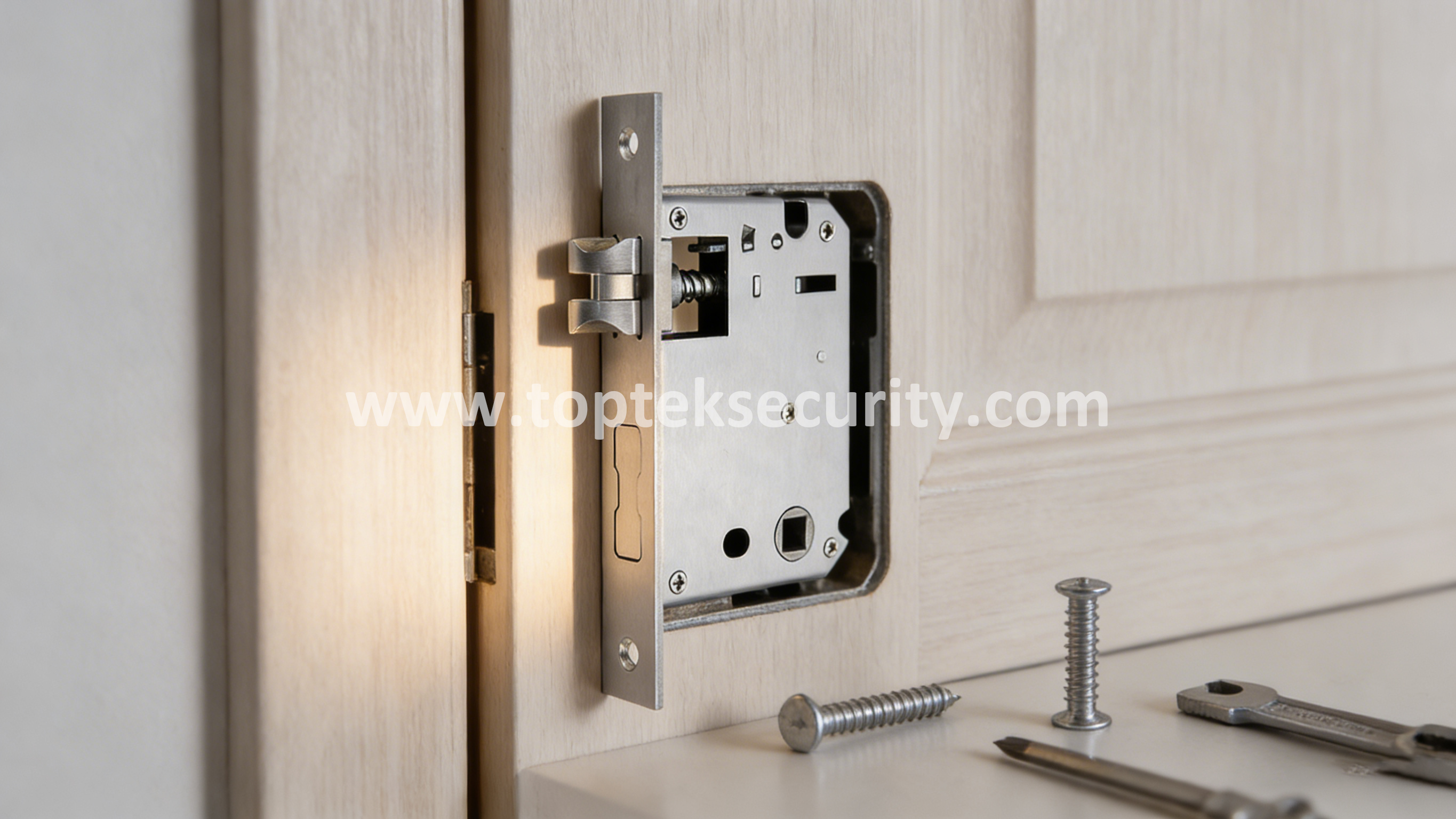
Troubleshooting Common Mortise Lock Problems
To help you diagnose the issue quickly, refer to the table below.
Symptom | Probable Cause | Recommended Fix |
Deadbolt drags or grinds | Strike plate misalignment due to door sag. | Tighten top hinges; file the bottom edge of the strike plate opening. |
Key spins but bolt doesn't move | Broken internal tailpiece or cam. | The lock cylinder or cassette requires replacement. |
Bolt extends but won't lock | Bolt hole in the door frame is blocked or too shallow. | Clear debris from the dust box; drill the pocket deeper into the frame. |
Door must be pushed/pulled to lock | Weatherstripping is too tight or latch position is off. | Adjust the strike plate tab or compress weatherstripping. |
Why Does Manufacturing Quality Matter?
While adjustment solves immediate problems, the longevity of a lock depends heavily on how it was built. A mortise deadbolt is a mechanical device subject to friction and stress every single day. Low-quality locks often suffer from "bolt creep," weak internal springs, or poor tolerances that make them prone to jamming even with perfect door alignment.
This is where sourcing from a reputable manufacturer becomes critical. Companies like Zhongshan Toptek Security Technology Co., Ltd. specialize in mechanical and electrified hardware solutions that minimize these maintenance headaches.
With over 30 years of production experience since 1991, Zhongshan Toptek Security Technology Co., Ltd. has established itself as a leader in the commercial lock industry. They operate a 15,000-square-meter factory with automated production lines, ensuring that every lock case meets rigorous international standards.
The Toptek Advantage
When you choose hardware from a manufacturer with this level of expertise, you are getting:
Durability: Their products are tested to exceed 1,000,000 cycles, ensuring the deadbolt mechanism remains smooth for years.
Certification: They hold certifications for CE, UL (fire-rated), SKG, and ISO standards (9001, 14001, 45001). This means the steel used in the deadbolt is hardened correctly to resist sawing and wear.
Variety: Whether you need American Commercial Mortise Locks, European Commercial Locks, or specialized Australian versions, their OEM/ODM services cover global specifications.
1
When Should You Replace Instead of Adjust?
Sometimes, no amount of adjusting the strike plate will fix the issue. If the internal mechanism of the lock feels "mushy," gritty, or completely seized, the lock case itself has failed.
In commercial environments with high traffic, internal components wear down. If your lock is over a decade old and acting up, replacement is often more cost-effective than repeated service calls. When upgrading, look for "Grade 1" commercial locks, which offer the highest level of security and operational smoothness.
Final Thoughts on Mortise Adjustment
So, can you adjust the deadbolt on a mortise lock? While you cannot change the dimensions of the bolt itself, you can certainly adjust the door and frame relationship to ensure smooth operation. 90% of deadbolt issues are solved by tightening hinges or filing the strike plate.
However, the best way to avoid lock issues is to install high-quality hardware from the start. A precision-engineered lock from a trusted manufacturer like Zhongshan Toptek Security Technology Co., Ltd. withstands the rigors of daily use far better than generic alternatives, keeping your building secure and your maintenance costs low.
If you are struggling with a lock that just won't fit right, take a close look at your door alignment, but also consider if it is time to upgrade to a security solution built to last.
mortise deadbolt
mortise lock
can you adjust the deadbolt on a mortise lock

 English
 العربية
 Français
 Русский
 Español
 Português
 Deutsch
 italiano
 日本語
日本語 한국어
한국어 Nederlands
 Tiếng Việt
 ไทย
ไทย Polski
 Türkçe
 አማርኛ
አማርኛ ພາສາລາວ
 ភាសាខ្មែរ
 Bahasa Melayu
 ဗမာစာ
ဗမာစာ தமிழ்
தமிழ் Filipino
 Bahasa Indonesia
 magyar
 Română
 Čeština
 Монгол
 қазақ
қазақ Српски
 हिन्दी
 فارسی
فارسی Kiswahili
 Slovenčina
 Slovenščina
 Norsk
Norsk Svenska
 українська
 Ελληνικά
 Suomi
Suomi Հայերեն
 עברית
עברית Latine
 Dansk
Dansk اردو
اردو Shqip
Shqip বাংলা
বাংলা Hrvatski
 Afrikaans
 Gaeilge
 Eesti keel
 Māori
Māori සිංහල
සිංහල नेपाली
 Oʻzbekcha
 latviešu
 অসমীয়া
 Aymara
 Azərbaycan dili
 Bamanankan
 Euskara
 Беларуская мова
 भोजपुरी
 Bosanski
 Български
 Català
 Cebuano
 Corsu
Corsu ދިވެހި
 डोग्रिड ने दी
 Esperanto
 Eʋegbe
 Frysk
Frysk Galego
 ქართული
 guarani
 ગુજરાતી
 Kreyòl ayisyen
 Hausa
Hausa ʻŌlelo Hawaiʻi
 Hmoob
Hmoob íslenska
 Igbo
Igbo Ilocano
 Basa Jawa
 ಕನ್ನಡ
ಕನ್ನಡ Kinyarwanda
 गोंगेन हें नांव
 Krio we dɛn kɔl Krio
 Kurdî
Kurdî Kurdî
Kurdî Кыргызча
 Lingala
 Lietuvių
 Oluganda
 Lëtzebuergesch
 Македонски
 मैथिली
 Malagasy
 മലയാളം
 Malti
Malti मराठी
मराठी ꯃꯦꯇꯥꯏ (ꯃꯅꯤꯄꯨꯔꯤ) ꯴.
 Mizo tawng
 Chichewa
 ଓଡ଼ିଆ
ଓଡ଼ିଆ Afaan Oromoo
 پښتو
پښتو ਪੰਜਾਬੀ
 Runasimi
 Gagana Samoa
 संस्कृत
 Gaelo Albannach
 Sepeti
 Sesotho
 chiShona
 سنڌي
سنڌي Soomaali
 Basa Sunda
 Wikang Tagalog
 Тоҷикӣ
 Татарча
 తెలుగు
 ትግንያውያን
 Xitsonga
 Türkmençe
 संस्कृत
 ئۇيغۇرچە
 Cymraeg
 isiXhosa
 ייִדיש
 Yorùbá
 isiZulu