Few home improvement tasks are as frustrating as returning from the hardware store only to realize you bought the wrong part. When it comes to door security, this is a frequent occurrence. You remove an old, faulty lock, buy what looks like an identical replacement, and find that the keyhole doesn't align with the hole in your door, or the lock body is too deep for the timber.
Getting the correct measurements for a replacement mortice lock is essential not just for convenience, but for the integrity of your door. Drilling new holes near existing ones can weaken the door structure, compromising your security. Whether you are upgrading to a high-security 5 lever mortice lock or simply replacing a worn-out latch on a bathroom door, understanding the dimensions is the first step.
This guide will walk you through exactly how to measure a mortice lock, decipher the terminology, and choose between the standard sizes to ensure a perfect fit every time.
Understanding the basics: What is a mortice lock?
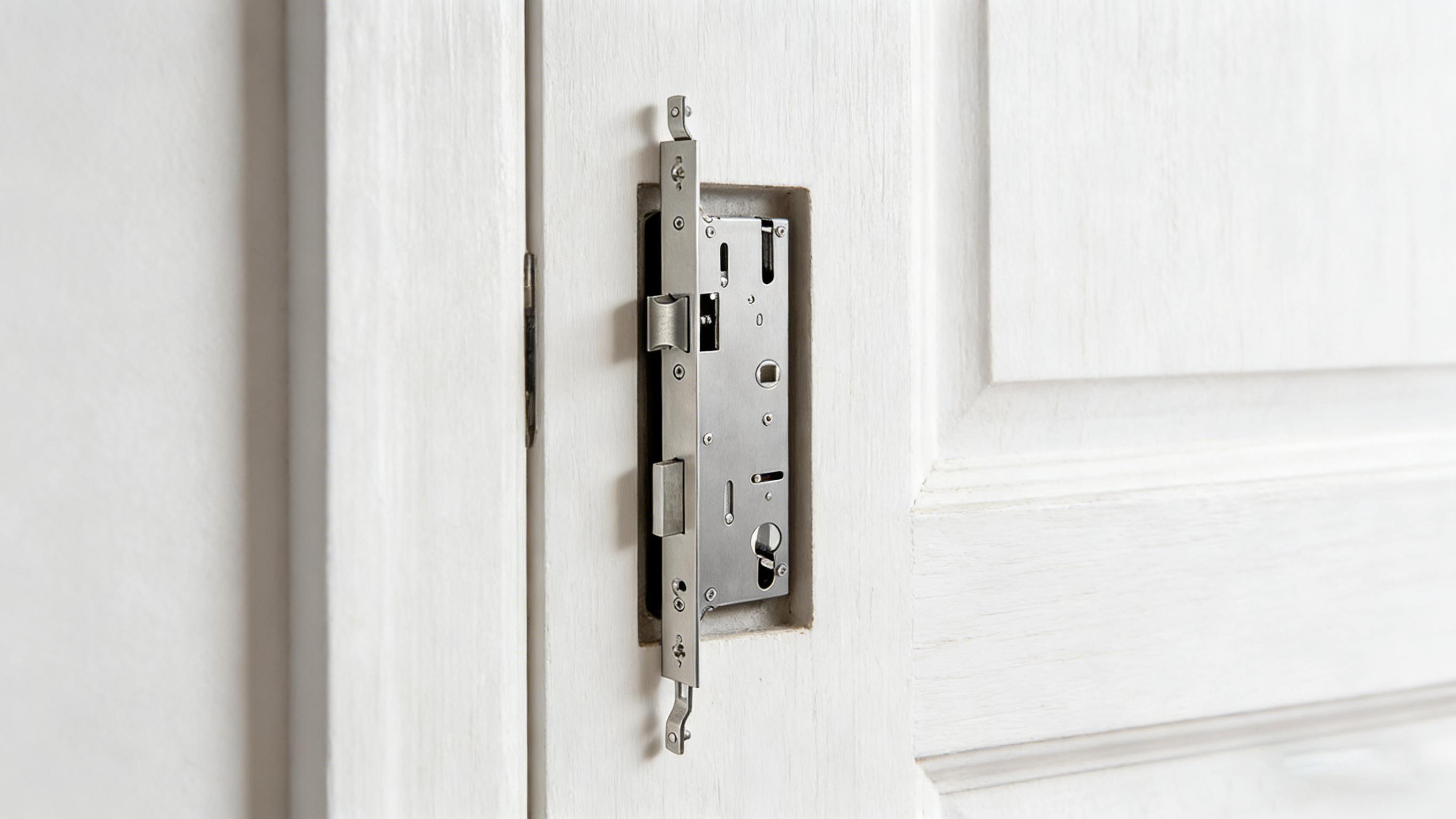
Before pulling out the tape measure, it helps to know exactly what you are looking at. Unlike surface-mounted locks (like rim latches or night latches), a mortice lock is embedded into a pocket—or "mortice"—cut into the edge of the door. This makes them stronger and more secure, as the door frame itself reinforces the lock.
There are two main types you will encounter:
Mortice Sashlock: This combines a deadbolt (operated by a key) and a latch (operated by a handle). You will typically find these on back doors or internal office doors where a handle is required to keep the door shut without locking it.
Mortice Deadlock: This has only a bolt and a keyhole. There is no handle or latch. These are commonly used on front doors for added security or on store cupboards.
Regardless of which type you have, the method for measuring them remains largely the same.
The two most critical measurements
When people ask "What size is my lock?", they are usually referring to the case depth. However, there is a second measurement called the backset which is actually more important for ensuring your new lock fits your existing door holes.
1. The Case Depth
This is the total width of the lock body that slides into the door. If you are chiseling a hole into a new door, this measurement determines how deep you need to cut. If you are replacing a lock, the new case depth must be smaller than or equal to the existing hole, though ideally, it should be an exact match to prevent the lock from rattling.
2. The Backset (The "Key" Measurement)
The mortice lock backset is the distance from the edge of the lock faceplate (the metal strip that sits flush with the door edge) to the center of the keyhole.
This is the most crucial dimension. If you get the backset wrong, your keyhole will not line up with the hole already drilled in your door.
Standard mortice lock sizes: 2.5 inch vs 3 inch
While there are many variations, the vast majority of mortice locks fall into two main size categories: 2.5 inch and 3 inch. These terms refer to the case depth, not the backset.
The 2.5 Inch Lock (64mm)
This is the standard size for most internal doors and frames where there isn't much width available.
The 3 Inch Lock (76mm)
This is often used on substantial front doors or commercial doors where a deeper lock creates a more elegant look by positioning the handle further away from the door frame (preventing you from scraping your knuckles).
1
Here is a quick reference table to help you identify what you likely have:
Common Name | Case Depth (Approx) | Backset (Approx) | Best Used For |
2.5 Inch | 64mm | 44mm | Internal doors, narrow frames, French doors |
3 Inch | 76mm | 56mm | Front doors, commercial heavy-duty doors |
4 Inch+ | 100mm+ | 80mm+ | Doors with large decorative knobs or specific architectural needs |
How to measure a mortice lock step-by-step
The most accurate way to measure is to remove the lock from the door. However, if you want to get a rough idea before removal, you can measure while it is still installed.
Method A: Measuring the lock while installed (The "Backset" method)
If the lock is currently in the door, you cannot measure the case depth. Instead, you must measure the backset to deduce the size.
Open the door and locate the keyhole.
Place your tape measure against the edge of the door (where the latch sticks out).
Measure the distance to the center of the keyhole.
If the distance is roughly 45mm, you likely need a 2.5-inch (64mm) lock.
If the distance is roughly 57mm, you likely need a 3-inch (76mm) lock.
Method B: Measuring the lock after removal (The accurate method)
For a replacement mortice lock, removal is the safest bet.
Case Depth: Measure the lock body from the faceplate to the back of the metal box. This is your case depth.
Backset: Measure from the front of the faceplate to the center of the square hole (the "follower") where the handle spindle goes, or the center of the keyhole.
Centers (Sashlocks only): If you have a sashlock (handle + key), you must measure the distance between the center of the handle follower and the center of the keyhole. The standard UK/European measurement is often 57mm, but commercial locks or older locks can vary significantly.
Faceplate Dimensions: Measure the height and width of the metal plate that sits on the edge of the door. This ensures the new faceplate will fit into the chiseled recess on your door edge.
Security standards: The 5 lever mortice lock
Size isn't the only factor; security grade is equally important. If you are measuring a lock for an external entrance door, you should be looking for a 5 lever mortice lock.
The "levers" are the internal mechanisms that the key lifts to slide the bolt.
2 or 3 Lever Locks: Generally offer lower security. These are fine for internal bedroom or bathroom doors where privacy is the goal, not burglary prevention.
5 Lever Locks: These are the standard for external security. They are much harder to pick or drill.
Many insurance policies require that external doors be fitted with a British Standard (BS3621) 5 lever mortice lock. When buying your replacement, check the packaging for the Kitemark symbol or relevant certification (like UL or CE for commercial applications) to ensure you are maintaining your home's security rating.
Frequently Asked Questions
What if my measurements don't match standard sizes?
If your measurements are wildly different from the 64mm or 76mm standards, you may have an old or specialized lock. In this case, do not force a standard lock. You may need to widen the mortice pocket for a larger lock or use a filler plate for a smaller one. Alternatively, seek out a specialist supplier like Toptek Security who deals in a wider range of commercial lock dimensions.
Can I replace a 2.5-inch lock with a 3-inch lock?
Technically, yes, but it requires work. You will need to chisel the pocket in the door deeper to accommodate the longer case. However, the bigger issue is the handle and keyhole. Because the backset is different, you will have to drill new holes in the face of your door and fill the old ones, which can look messy. It is always better to replace like-for-like.
What is the difference between a sashlock and a deadlock?
A sashlock has a latch and a bolt (handle and key). A deadlock has only a bolt (key only). If your door has a handle that turns, you need a sashlock. If you simply pull the door open or use a separate knob, you likely need a deadlock.
How do I measure the "centers" on a sashlock?
Measure the distance from the center of the square hole where the handle spindle goes (the follower) to the center of the round part of the keyhole. The standard is usually 57mm, but older locks might be 45mm or even different imperial measurements. This must match your door handle backplate.
Finding the right hardware
Identifying the correct door lock measurement guide is the difference between a ten-minute DIY job and a ruined door. By focusing on the backset and the case depth, you can ensure your new lock slots perfectly into place, maintaining both the aesthetics and the security of your property.
Whether you are looking for high-security commercial mechanical locks, fire-rated hardware, or specialized electronic access solutions, precision matters. At Toptek Security, we specialize in mechanical and electrified hardware solutions that meet rigorous international standards. If you are unsure about the specific requirements for your commercial or residential project, explore our range of mortice locks to find the perfect fit for your safety needs.
Mortice lock sizes
5 lever mortice lock
How to measure a mortice lock

 English
 العربية
 Français
 Русский
 Español
 Português
 Deutsch
 italiano
 日本語
日本語 한국어
한국어 Nederlands
 Tiếng Việt
 ไทย
ไทย Polski
 Türkçe
 አማርኛ
አማርኛ ພາສາລາວ
 ភាសាខ្មែរ
 Bahasa Melayu
 ဗမာစာ
ဗမာစာ தமிழ்
தமிழ் Filipino
 Bahasa Indonesia
 magyar
 Română
 Čeština
 Монгол
 қазақ
қазақ Српски
 हिन्दी
 فارسی
فارسی Kiswahili
 Slovenčina
 Slovenščina
 Norsk
Norsk Svenska
 українська
 Ελληνικά
 Suomi
Suomi Հայերեն
 עברית
עברית Latine
 Dansk
Dansk اردو
اردو Shqip
Shqip বাংলা
বাংলা Hrvatski
 Afrikaans
 Gaeilge
 Eesti keel
 Māori
Māori සිංහල
සිංහල नेपाली
 Oʻzbekcha
 latviešu
 অসমীয়া
 Aymara
 Azərbaycan dili
 Bamanankan
 Euskara
 Беларуская мова
 भोजपुरी
 Bosanski
 Български
 Català
 Cebuano
 Corsu
Corsu ދިވެހި
 डोग्रिड ने दी
 Esperanto
 Eʋegbe
 Frysk
Frysk Galego
 ქართული
 guarani
 ગુજરાતી
 Kreyòl ayisyen
 Hausa
Hausa ʻŌlelo Hawaiʻi
 Hmoob
Hmoob íslenska
 Igbo
Igbo Ilocano
 Basa Jawa
 ಕನ್ನಡ
ಕನ್ನಡ Kinyarwanda
 गोंगेन हें नांव
 Krio we dɛn kɔl Krio
 Kurdî
Kurdî Kurdî
Kurdî Кыргызча
 Lingala
 Lietuvių
 Oluganda
 Lëtzebuergesch
 Македонски
 मैथिली
 Malagasy
 മലയാളം
 Malti
Malti मराठी
मराठी ꯃꯦꯇꯥꯏ (ꯃꯅꯤꯄꯨꯔꯤ) ꯴.
 Mizo tawng
 Chichewa
 ଓଡ଼ିଆ
ଓଡ଼ିଆ Afaan Oromoo
 پښتو
پښتو ਪੰਜਾਬੀ
 Runasimi
 Gagana Samoa
 संस्कृत
 Gaelo Albannach
 Sepeti
 Sesotho
 chiShona
 سنڌي
سنڌي Soomaali
 Basa Sunda
 Wikang Tagalog
 Тоҷикӣ
 Татарча
 తెలుగు
 ትግንያውያን
 Xitsonga
 Türkmençe
 संस्कृत
 ئۇيغۇرچە
 Cymraeg
 isiXhosa
 ייִדיש
 Yorùbá
 isiZulu